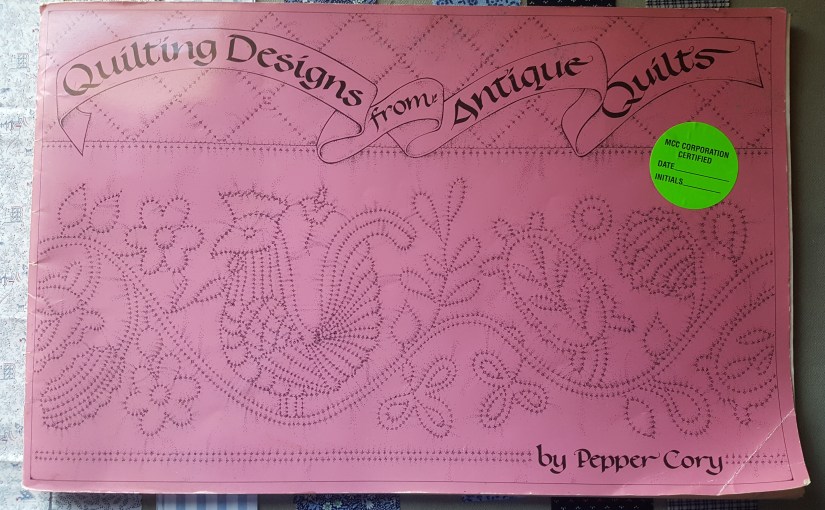
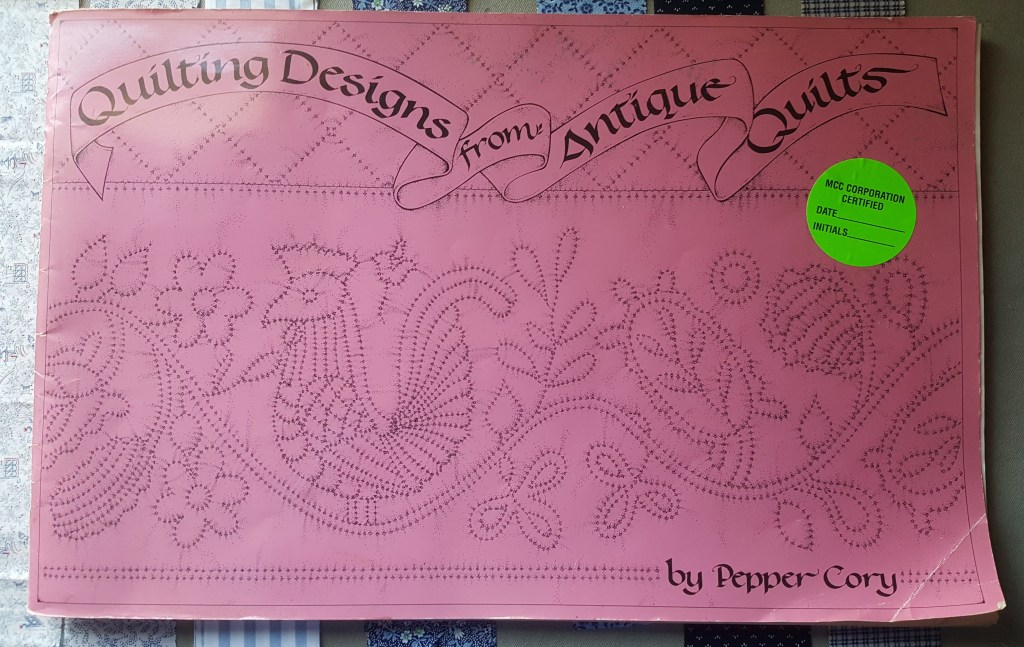
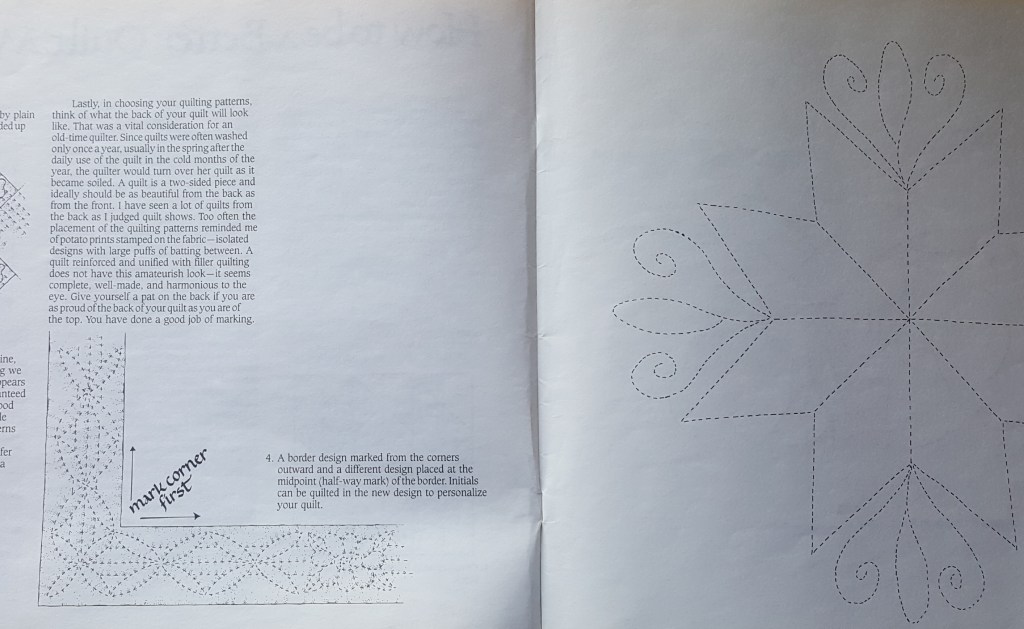
My Mom found a book of hand quilting patterns on one of the flea market outings, and she gifted it to me for my birthday. I have spent a week transferring the patterns to transparent plastic stencils. I have most of them ready for use and marked for border or block size. I think the best use of these would be a whole cloth quilt, but that will have to wait. There are open projects ahead of that.
I have hand quilted all but one of the quilts I have pieced. I think my stitches are even and relatively small, but that is only my rookie eye. Antebellum era quilts were expected to display 10 to 12 stitches per inch. Yes, 10 to 12 stitches per inch, and it recommends counting the weft and warp threads for even stitching. For perspective, weft and warp threads are the tightly woven threads that make cloth. Look closely, very closely – all natural cloth is made of threads woven. That is what they recommend counting. Small stitches are an understatement!
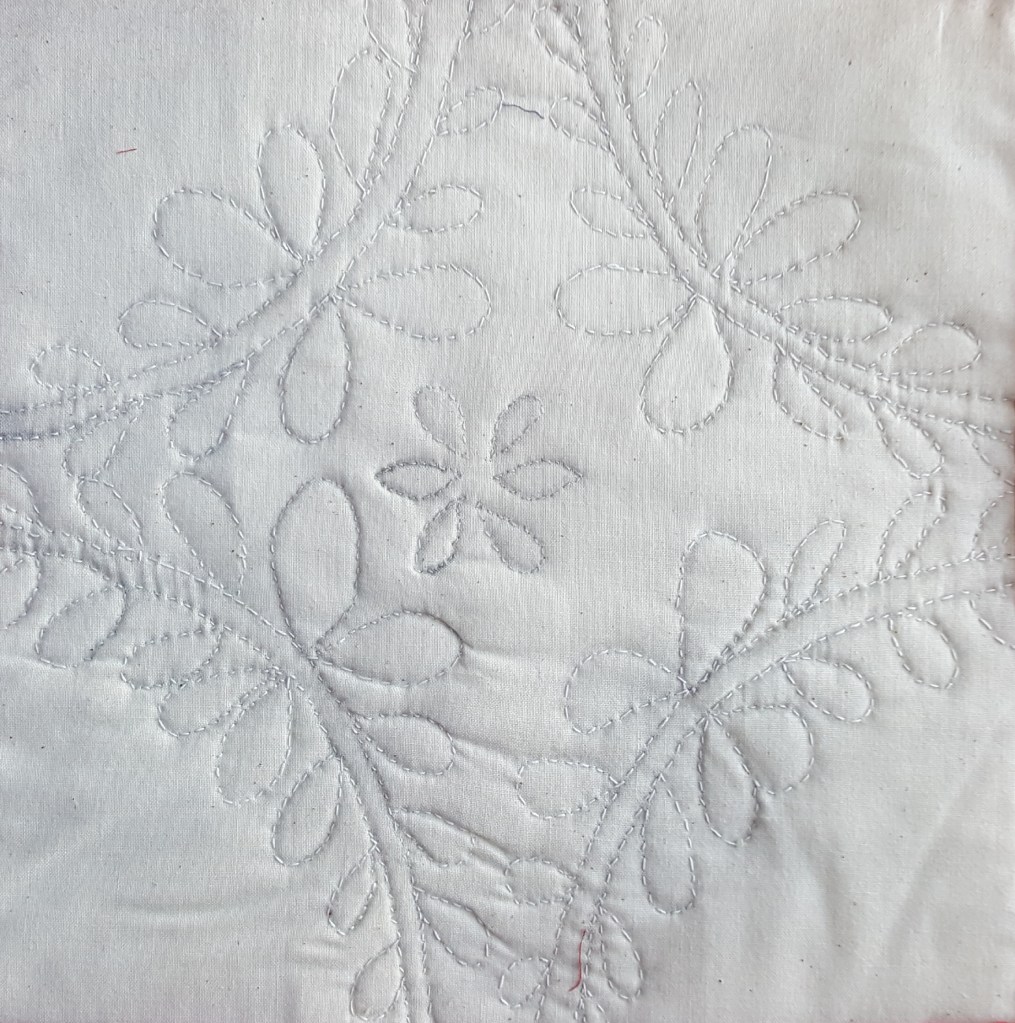
Why? you might ask. I am going to speculate, because firsthand accounts are not available at this point, and I have not found the documentation to prove my hypothesis. First, quilts were typically used extensively, and constantly reminding a child or loved one to be careful not to pull a thread was not practical. Such small stitches are not going to pull, break, or snag easily. Second, by adding thread the fabric is stabilized. More thread, more stable. Lots of quilts were made from worn garments, bedding, and feed sacks that were worn out from the previous uses. These are utilitarian reasons, and ones I think to be valid. Third, I think there was a personal pride in mastering the small, even stitches. It is not a stretch to imagine the ladies around a quilting bee comparing and coaching the younger ladies to master this level of hand quilting.
My Grandmother could quilt that scale; in fact, I don’t think she even thought of it. If she was counting threads, it was so second nature that she probably was no longer conscious of it. I have made myself a scale, and with these “new” templates I am going to make a sampler. I have no doubt I will need my seam ripper and need to start again and again. I am determined to learn these skills to make quilts that are beautiful, loved, and useful.
In the book there are in-depth descriptions of where patterns came from – antique stores, auctions, museums, collections. Amish quilters seem to have providence on the meaning and source of the patterns used. Some are lost to history and appear to be the fancy of the quilter. Some are very symmetrical and some are artistically drawn with whimsy. The hidden stories of quilts are part of what draws me into each one. The patterns have meaning; the color selections add another level of meaning; and to complete the story, a quilting pattern is used to literally and figuratively tie it all together.
I will continue to update you on the treasures I am learning and skills I am developing.
Thank you, Mom, for knowing that I would love an old quilting book!
Thank you, as always, for spending some time with This Lil Pig Studios!
 This Lil Pig Studios