Gift of Hand Quilting

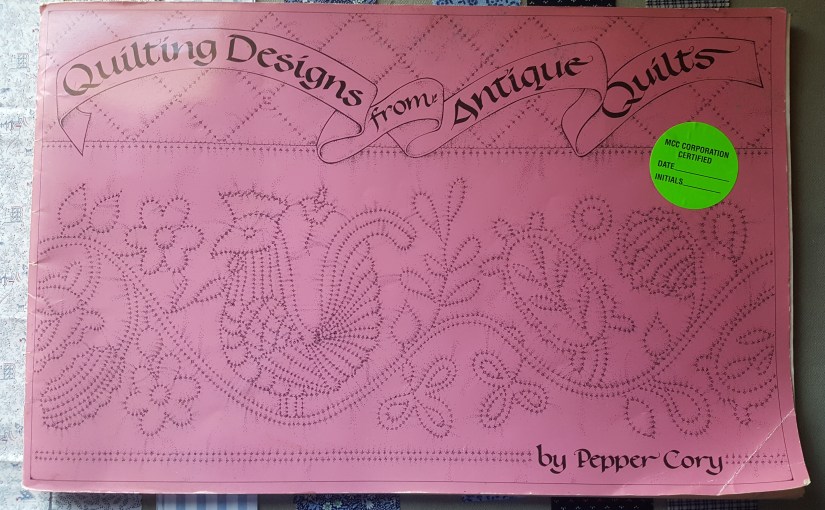
My Mom found a book of hand quilting patterns on one of the flea market outings, and she gifted it to me for my birthday. I have spent a week transferring the patterns to transparent plastic stencils. I have most of them ready for use and marked for border or block size. I think the best use of these would be a whole cloth quilt, but that will have to wait. There are open projects ahead of that.
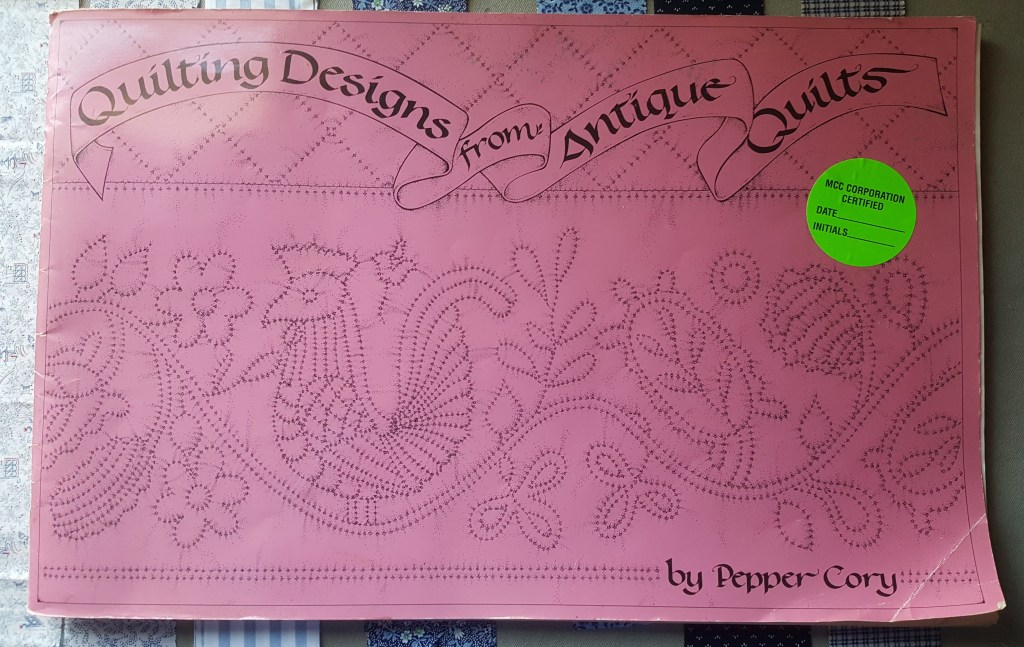
I have hand quilted all but one of the quilts I have pieced. I think my stitches are even and relatively small, but that is only my rookie eye. Antebellum era quilts were expected to display 10 to 12 stitches per inch. Yes, 10 to 12 stitches per inch, and it recommends counting the weft and warp threads for even stitching. For perspective, weft and warp threads are the tightly woven threads that make cloth. Look closely, very closely – all natural cloth is made of threads woven. That is what they recommend counting. Small stitches are an understatement!
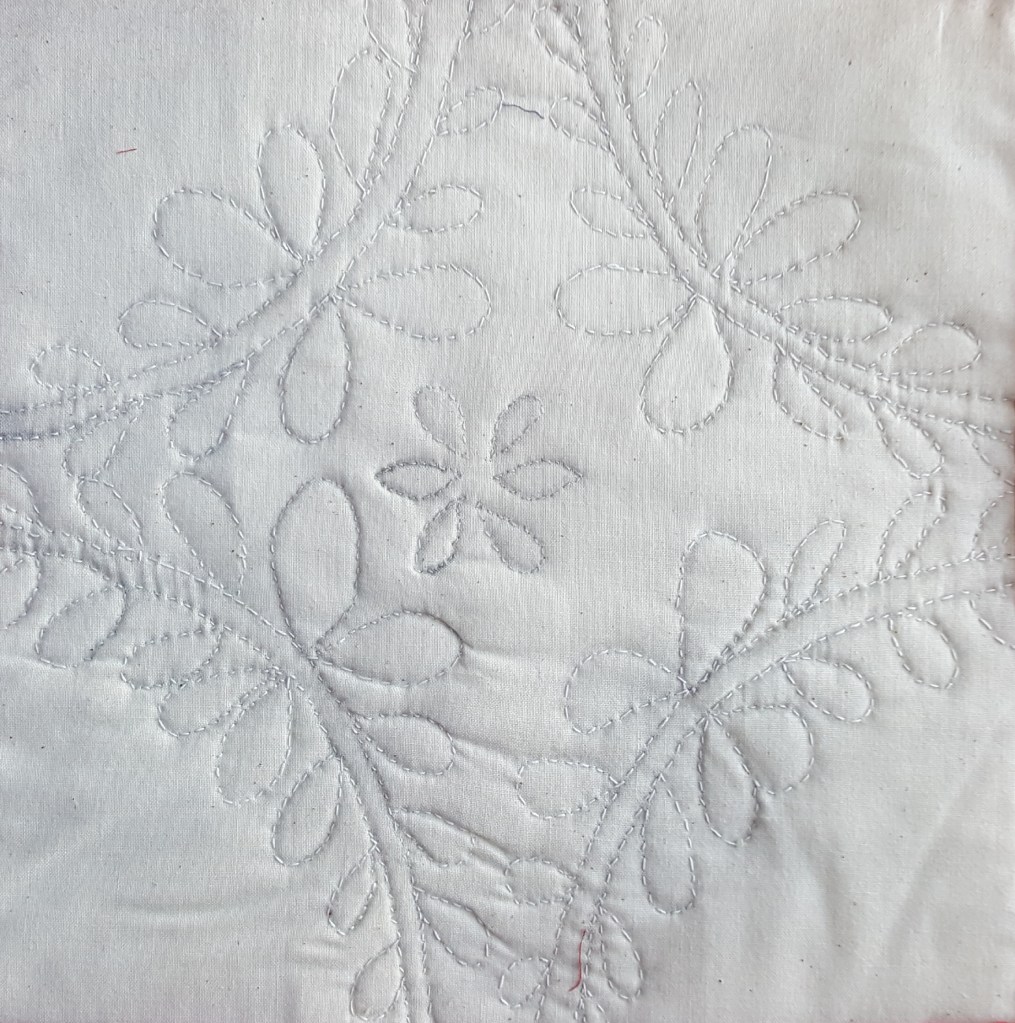
Why? you might ask. I am going to speculate, because firsthand accounts are not available at this point, and I have not found the documentation to prove my hypothesis. First, quilts were typically used extensively, and constantly reminding a child or loved one to be careful not to pull a thread was not practical. Such small stitches are not going to pull, break, or snag easily. Second, by adding thread the fabric is stabilized. More thread, more stable. Lots of quilts were made from worn garments, bedding, and feed sacks that were worn out from the previous uses. These are utilitarian reasons, and ones I think to be valid. Third, I think there was a personal pride in mastering the small, even stitches. It is not a stretch to imagine the ladies around a quilting bee comparing and coaching the younger ladies to master this level of hand quilting. 

My Grandmother could quilt that scale; in fact, I don’t think she even thought of it. If she was counting threads, it was so second nature that she probably was no longer conscious of it. I have made myself a scale, and with these “new” templates I am going to make a sampler. I have no doubt I will need my seam ripper and need to start again and again. I am determined to learn these skills to make quilts that are beautiful, loved, and useful.

In the book there are in-depth descriptions of where patterns came from – antique stores, auctions, museums, collections. Amish quilters seem to have providence on the meaning and source of the patterns used. Some are lost to history and appear to be the fancy of the quilter. Some are very symmetrical and some are artistically drawn with whimsy. The hidden stories of quilts are part of what draws me into each one. The patterns have meaning; the color selections add another level of meaning; and to complete the story, a quilting pattern is used to literally and figuratively tie it all together.
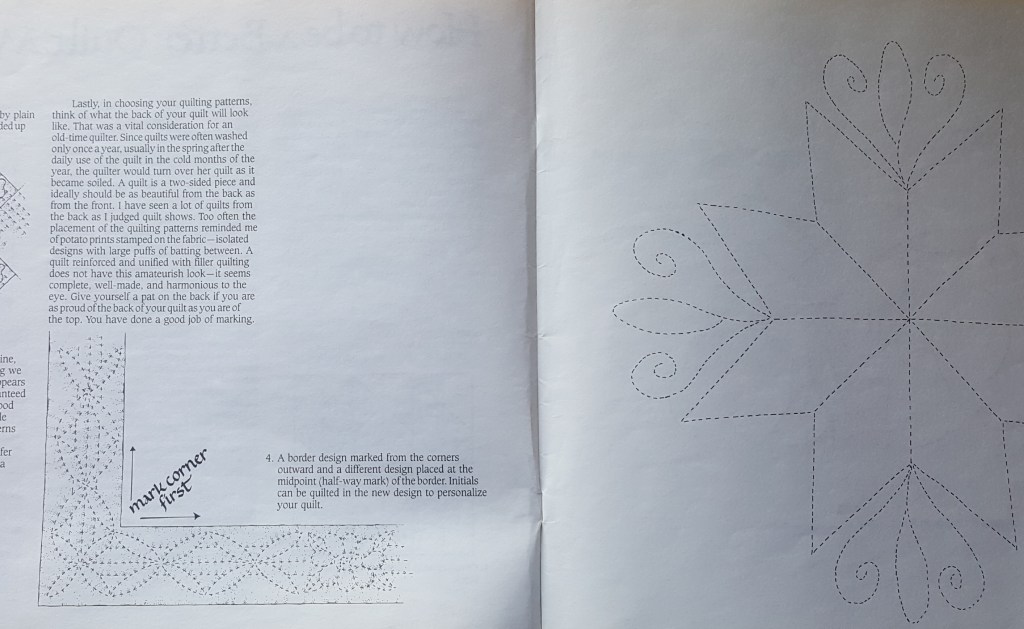
I will continue to update you on the treasures I am learning and skills I am developing.

Thank you, Mom, for knowing that I would love an old quilting book!

Thank you, as always, for spending some time with This Lil Pig Studios!
A Letter To My Kindred Spirit

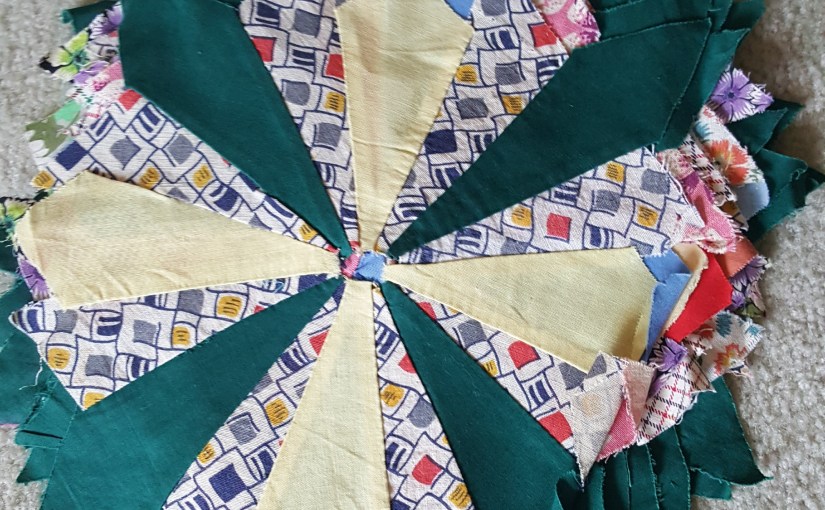
My Aunt gave me a stack of “vintage” quilting magazines, most are dated in the eighties and early nineties.  I have read and made transfers of the patterns. Making note of the tips and tricks that were popular then. Occasionally, I run across something that speaks to my quilting journey.  This particular letter hits quite close to home because as I type this and wake tomorrow to work on yet another project, there is a stack of donated blocks that my Grandmother brought home from the donation center where she volunteers.  They are clearly from some other quilter’s old project put aside. The publication is now out of print and the publisher liquidated, but the letter lives on.

Country Quilts Winter 1995 “A Letter To An Unknown Quilter,” by Patricia Rueth

…..Dear Kindred Spirit,

I have your quilt blocks…your work in progress. I wanted you to know that I got them two years ago.  Until today, I’ve been content just to own them. I’ve gotten them out of their draw often to play with them. I’ve tried a great many different ways to arrange them. I’ve often wondered how you planned to put them together.

I decided months ago that it would be best to have three more of the blocks. A quilt with none blocks by five blocks just didn’t look right. Eight blocks by six blocks looked better. Each of your blocks were sewn to pages from old farm magazines. The three new ones I cut will be on used computer paper. The times have changed.

I’ve haunted fabric stores looking for the right antique-looking prints that will blend in and not stick out like a sore thumb. You would most likely get a good laugh about that. I’ve also learned a great deal about you from the blocks.

You were probably along in years when you made them… your fine stitches are rather long and the knots are rather large. You started this project in the early 1940’s… I know this because the magazine pages are dated 1941-42. I wasn’t even born yet when you made the quilt blocks.

My guess is that you were a farm wife in the mid-west. You and your husband enjoyed reading the Progressive Farmer. The pages tell a great deal about farming in Tennessee and Kentucky.  It is obvious that you lived through the Great Depression – “Waste Not, Want Not.” I can see that all through your quilt. I see old feed sacks where the stitches have been removed. You are a wife. In the middle of a block I see your husband’s tie. You are a mother. There is a kiddie print with little girls and wagons full of flowers. You had a daughter. Many of the pieces have been cut from worn garments. I imagine I see aprons, robes, baby clothes, dresses and the like.

A friend must have shared with you many scraps of that red material. It is used frequently throughout the blocks. It has never been used before. When a piece wasn’t long enough to go across the diagonal of the 10 inch square, you pieced it together on your sewing machine. I’ll bet it was a treadle machine like the one that decorates my hallway. 

I worked hard today trying to get those three extra blocks ready. They would not fit in no matter how I made them. At last, I decided they would all have to have some of your fabric to make it work. That meant I had to undo three of your blocks and add my material to your work and add your work to my blocks.

Now it is our work. I hope you don’t mind. I started out doing all my work by hand. I didn’t want to mar the integrity of your work. When I found your machine stitches on a couple of the patches, I switched to the sewing machine. Somehow I think you would approve.

When I began this, I thought I’d just rip off the paper and put the blocks together. I find that I can’t do that. Those pages have been on the blocks for fifty years. They are a part of this quilt’s history. I’m carefully peeling them off. As I work, I am learning a great deal about history. You were just using scrap paper as a foundation to keep the blocks square and the right size. In doing so, you shared your times with me. The price of a new Studebaker Champion car starts at $690. Patterns for all sorts of clothing are 10-cents each. Movies worth seeing include Walt Disney’s Fantasia. There is an ad for Poll Parrot shoes. Those 45 pages are treasures that will stay with the quilt.

I know the blocks were stored for awhile. I picture them in a box in your attic. One block is badly sun-bleached. It must have been on top. No matter, I’ve put it in a corner. I couldn’t leave it out. 

I often wondered why you never got around to putting it together. Perhaps you became ill and couldn’t finish it. Or maybe it was one of your works in progress that was put aside until something else got finished. I’m very self conscious about my work. I’m not sure I want anyone to view my work ass critically as I’m viewing yours. I did have five quilts in varying stages of progress, but before I started work on this, I made myself finish all but one. I hear you speak to my of procrastination.

I’m putting our quilt together by machine, but with great care. I want us both to be able to take a lot of pride in this. I plan on quilting it by hand. I usually quilt by machine. I am not very good at hand quilting. My mom keeps telling me that I won’t learn any younger. I wanted to let you know that you’ve inspired me to try. I’m anxious to see it in y antique quilting frame. I look forward to the time my mom and I will spend together as it becomes a real quilt at long last. 

I still have a long way to go, but they are no longer just quilt blocks. Our quilt is beginning to take shape. Through this quilt I feel I’ve gotten to know you. I think we are a lot alike. We are kindred spirits and I’m glad we found each other….

Thank you, as always for spending some time with This Lil Pig Studios!
To Mend or Not to Mend

Quilts are very personal and live in a very intimate place in our lives. They are handmade with great investments of time and energy and given in love. They are meant to comfort, warm,and wrap the recipient in a most personal way. That being said,we love them-sometimes ‘til threadbare. If I have gifted you a quilt, please wear it out, use it,wash it, love it to pieces. Nothing makes me happier than seeing one of my quilts in the background of the people I care about lives being lived.

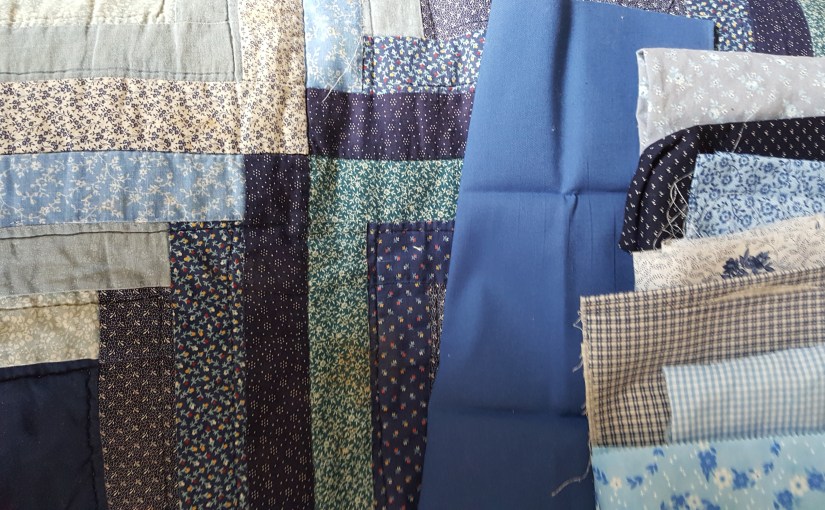
I have a dear friend that received a quilt as a wedding gift 30+ years ago from the bride’s family. It has adorned the bed where they have slept, cared for each other through illness and health, cuddled their children, and probably created said children (wink). It is threadbare in places and needs a new binding. I trooped home with it, started the fabric selection process to as closely match the existing as possible, and designed a few new blocks to commemorate the love it represents and the journey the quilt and my friends have been on through the years. This is what she asked for and what I am executing; however, it occurred to me not all quilts should be mended.

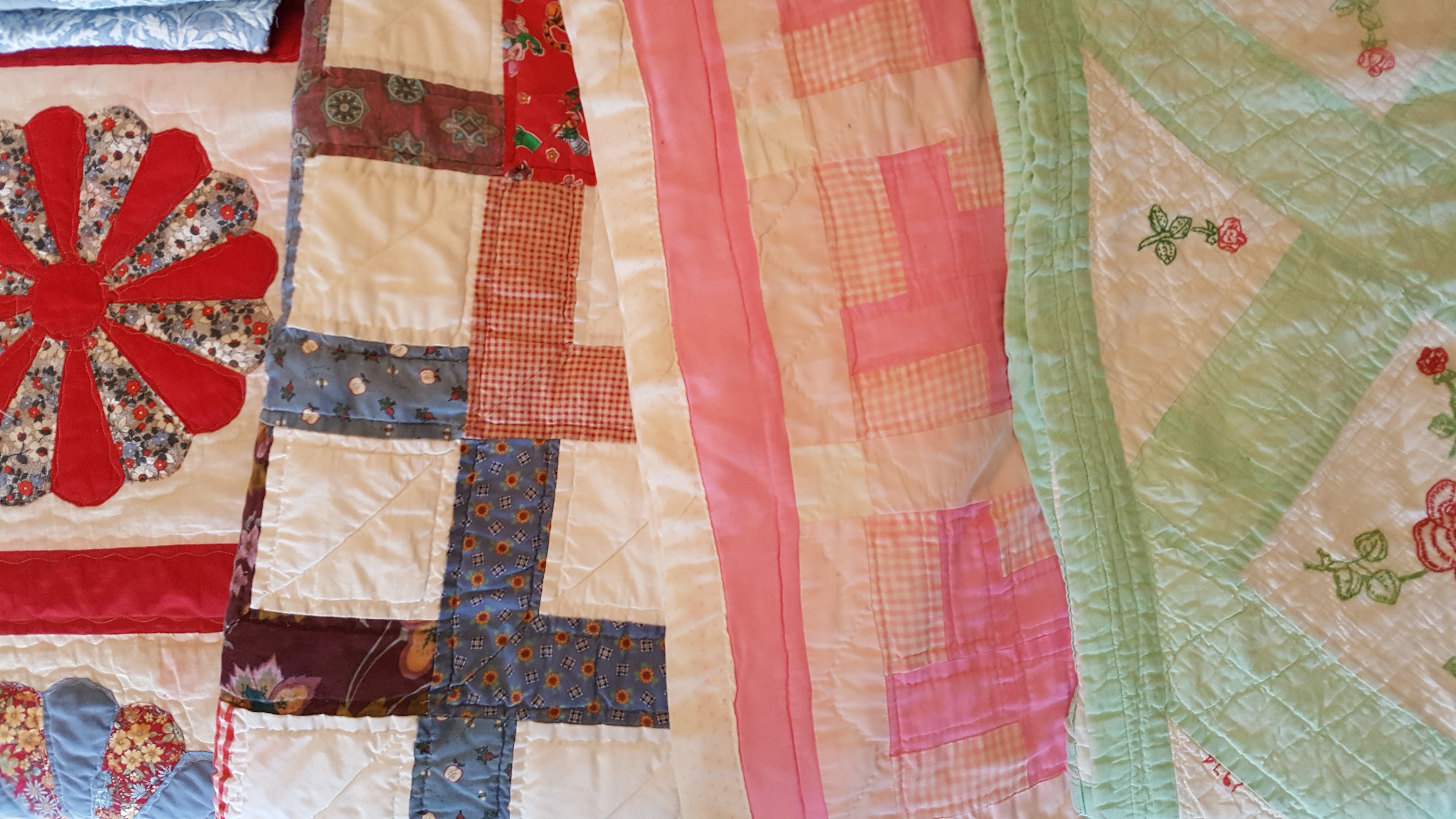
I think about the museum quilts and that they were once loved personal belongings, too –what separates what to mend and what to leave in its original vintage? Okay,time for a hard and fast rule. I will not mend, alter, or otherwise change a quilt made prior to 1950. That is my rule and not applicable to anyone else. My thoughts on this are -they are antique. If you love a quilt which is that old, and it has survived to this point -put it on display, put it in a cedar chest, and preserve it. Fabrics milled from this point in time are not easily acquired and replications are not the same and would diminish the quilt. If you have the good fortune to have a quilt that you know its providence, make a note, have a label made, and have the foresight to understand 100 years from now someone will be interested.That little clue will aid in the investigation. Modern made quilts are to be considered on a case-by-case basis. The quilts made by my Grandmothers cannot be replaced and are cherished as much for the talents in quilting as the finished product itself. Finding one of Mamaw’s sharps (needles) in the quilt means she was distracted and approaching the end of her days when it was being completed. I cherish that little find! My dear friend wanting her wedding quilt mended is a personal decision for her to continue using this beloved item well into the next three decades of their journey. I try to utilize everything to its highest potential and that means mending, re-purposing, and up-cycling whenever possible. That being said,there are just somethings which need to be left alone in their original form.

So what do I mean? Think about your quilt and its place in history, what it means and to whom. Love them, use them,and live your journey with them in the background-silent witnesses to the lives we love. Thank you, as always for spending some time with This Lil Pig Studios!
Not The Average Log Cabin

The Log Cabin quilt block is a very traditional pattern. Historically, the center block would be red, representing the fire from the hearth and the center of the home. The strips would be made from scrap strips separated by color for high contrast. Please note that none of our quilting ancestry went to a fabric store with a pattern and color palate in hand to purchase supplies to create a new quilt. My depression era Grandmothers used what they had on hand. Re-purposing an up-cycling before either were part of the lexicon. This is my favorite part of the beauty of antique quilts and the traditional patterns, the utilization of small scraps to create something functional and beautiful.

Baby Girl and Baby Boy Log Cabin Quilts

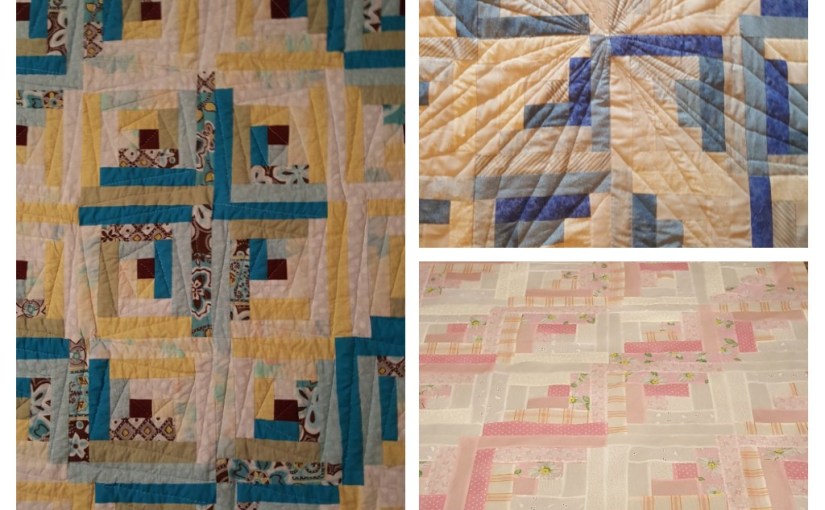
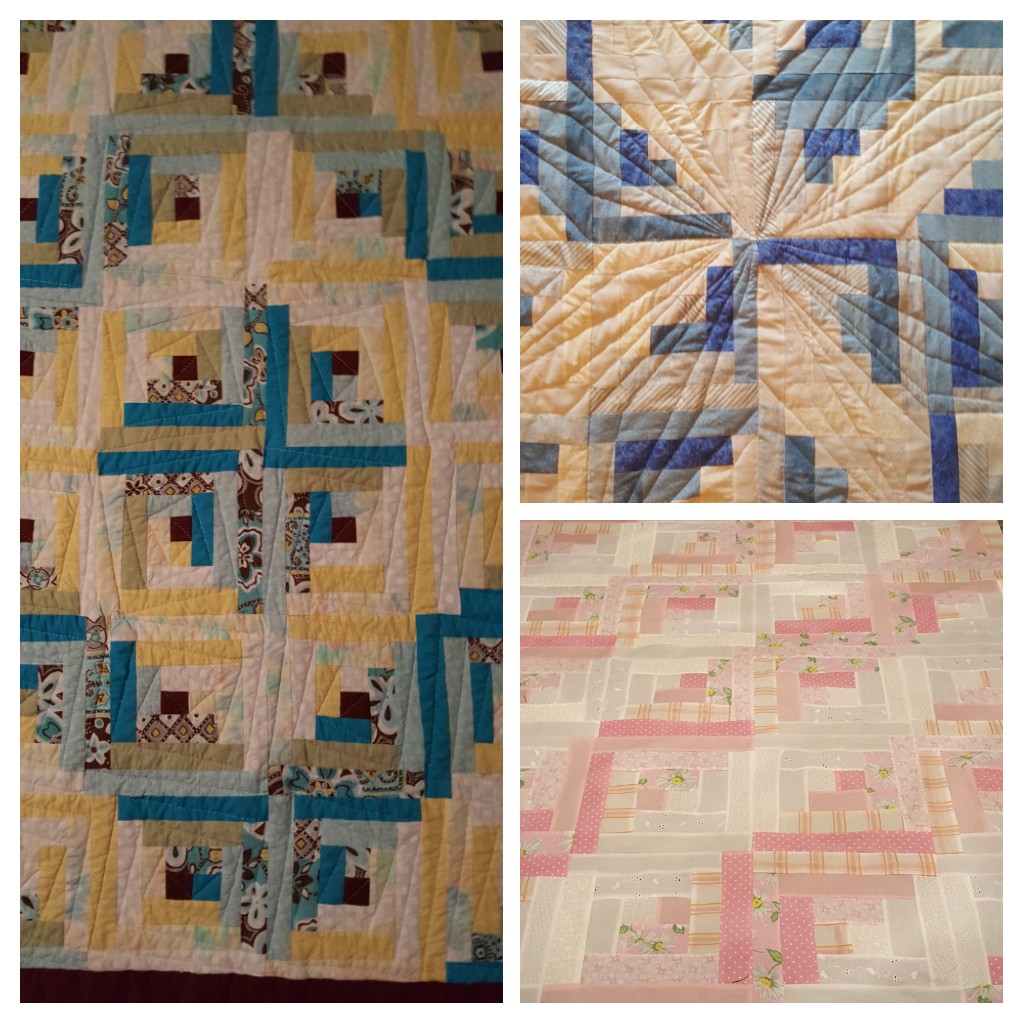
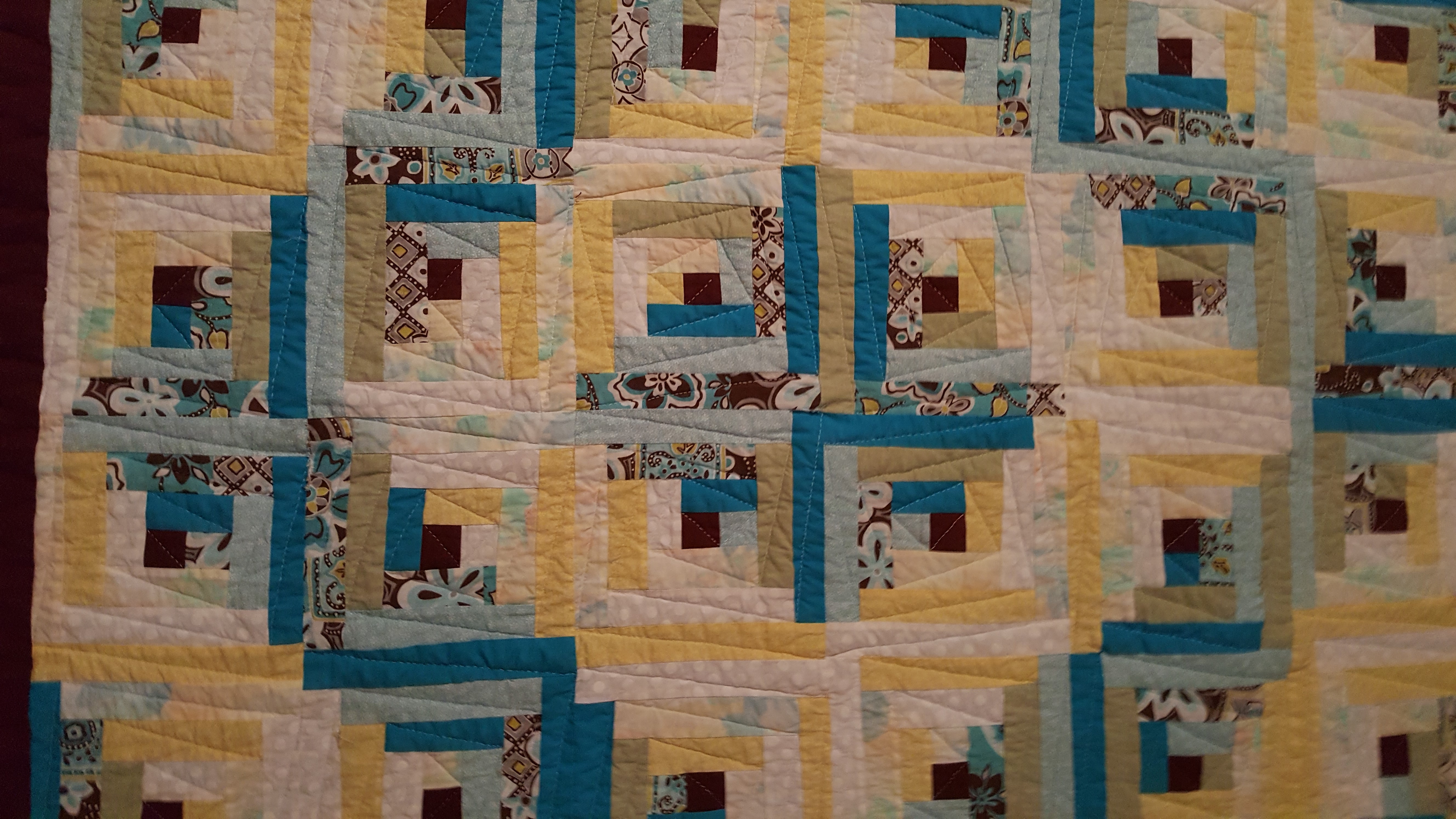
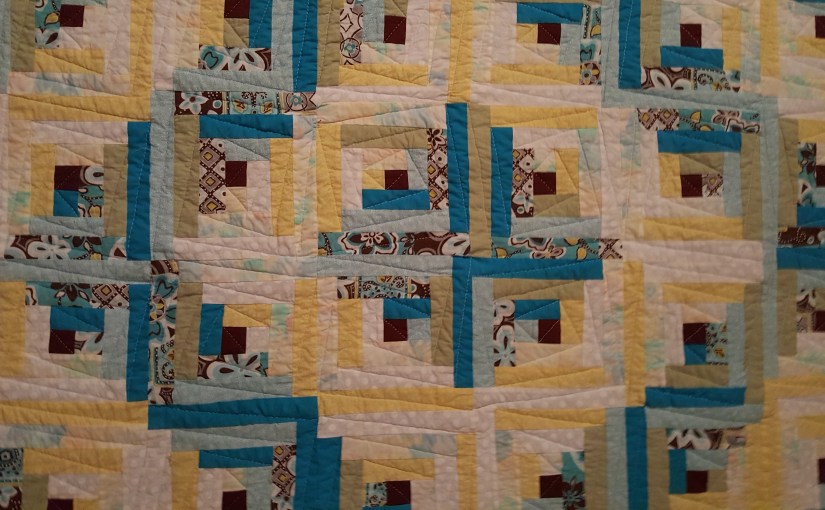
I made three Log Cabin quilt variations for baby gifts. The blocks are laid out the same for each, however by changing the direction of the blocks and changing the hand quilting pattern over lays the affects are completely different.

Variations of Log Cabin Quilt

By turning the turquoise and yellows there is a cross affect that I quilted in a diagonal to create the illusion of dimension. The light blue and white were turned to form a star pattern and set to stand out with the star over lay quilting. Finally, the pink and white were turned to create a meandering path across the quilt. Three very different quilts all utilizing the same traditional Log Cabin block.

If you would like more information or the pattern, please drop me a line in the comments. As always thank you for spending time with us in the Pig Pen and visiting This Lil Pig Studios!
Denim Up-Cycled Quilt

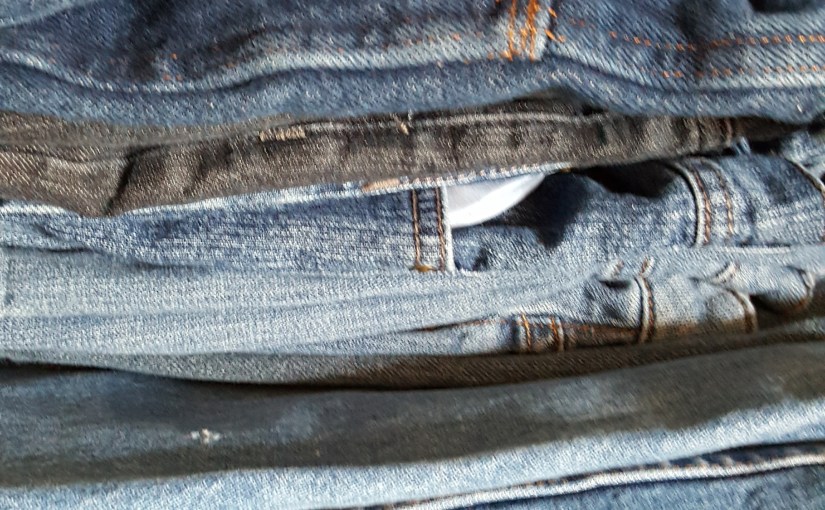
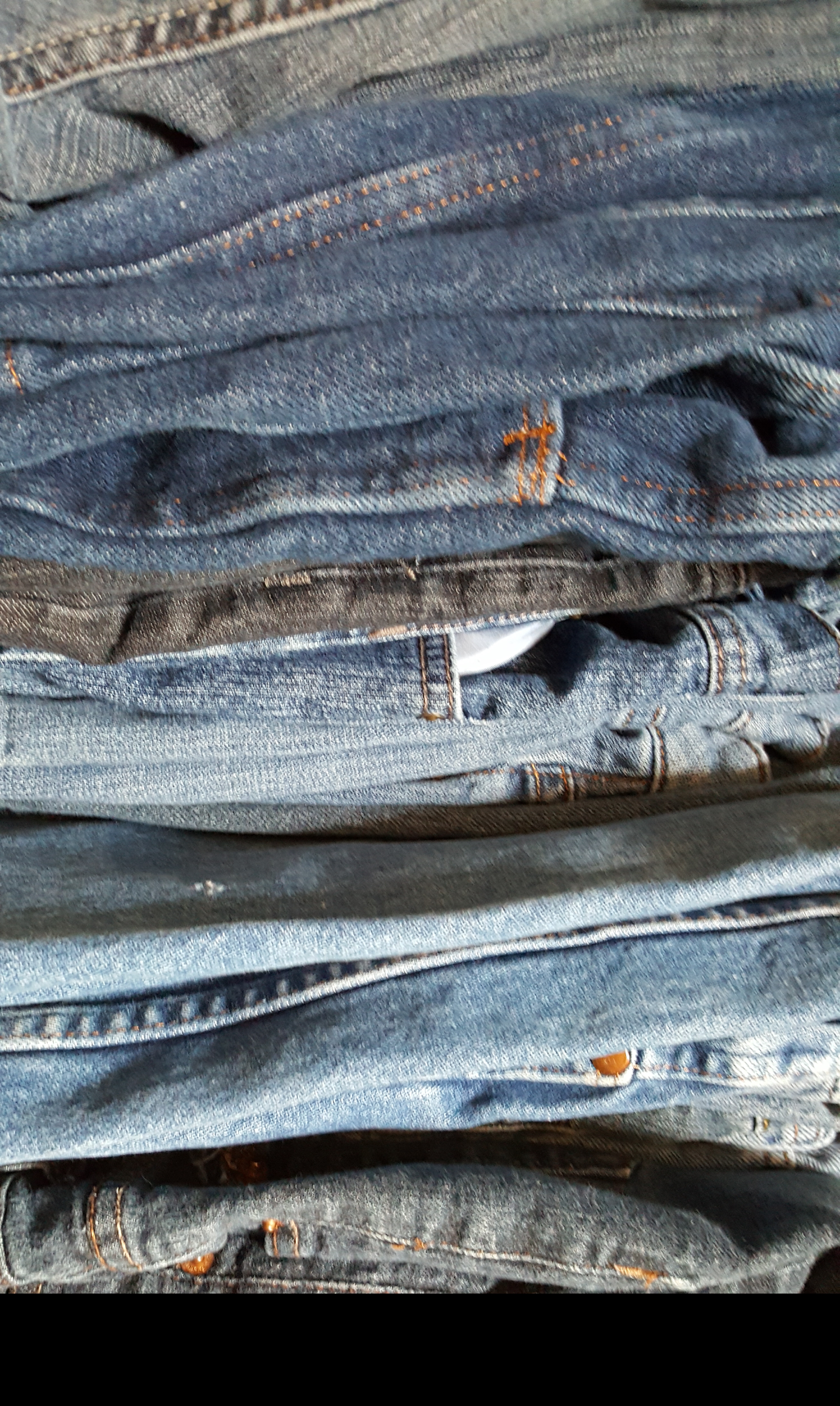
A little over a year ago my very talented photographer Jen Whitfill ( Check out her website showcasing her beautiful work at https://jenwhitfill.zenfolio.com/ ) gave me 50 gallon garbage bag of denim blue jeans that were out grown, worn,or otherwise not being used.

Stacks of jeans

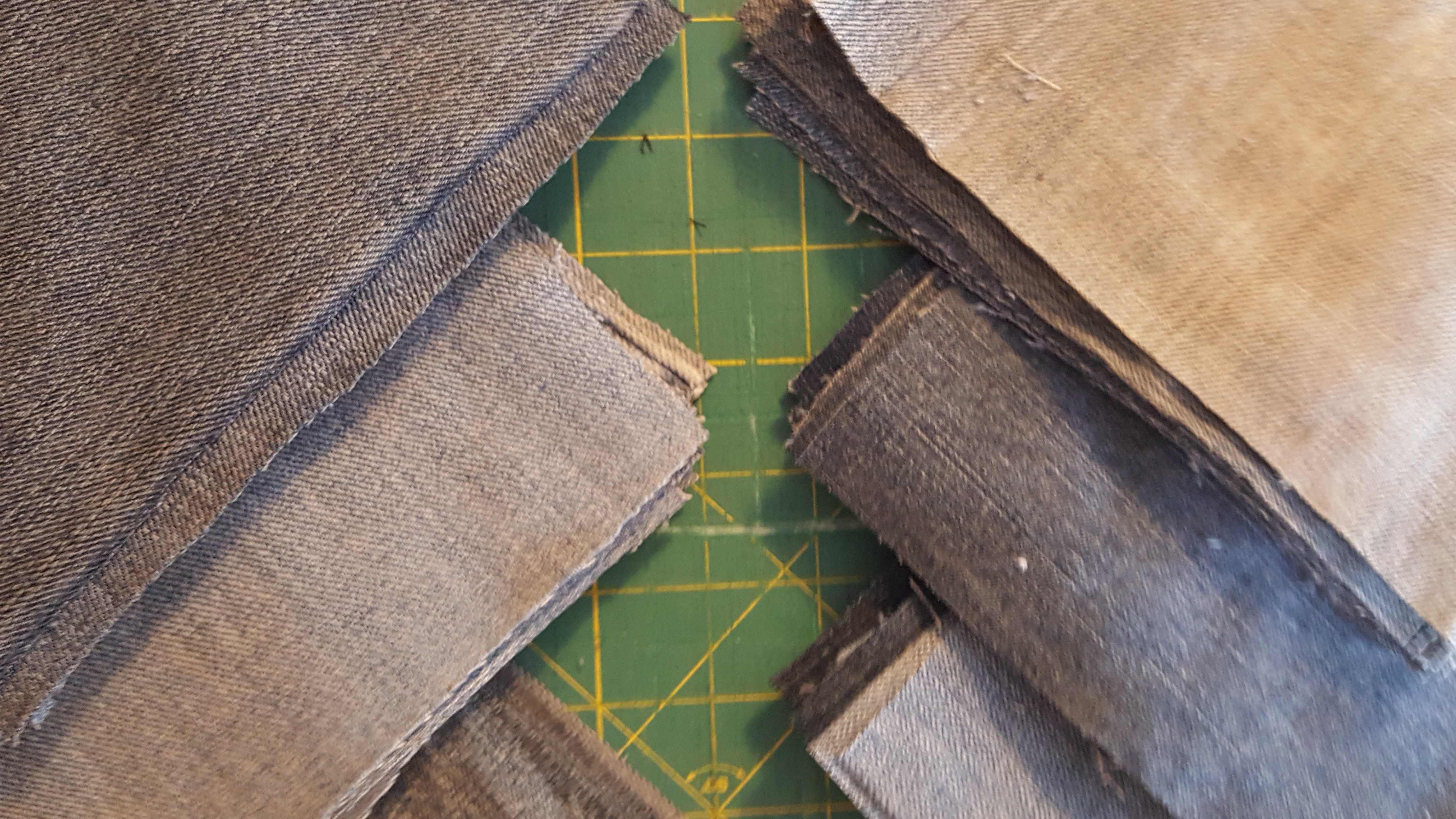
I started this project by deconstructing the jeans. Removing the waist band, pockets, and thick double stitched in seams. This leaves large leg irregular rectangle pieces that can be cut into the 7 1/2″ squares for piecing the quilt. A side note: a cutting mat, rotary cutter, and square are essential tools for the heavy duty fabric cutting.

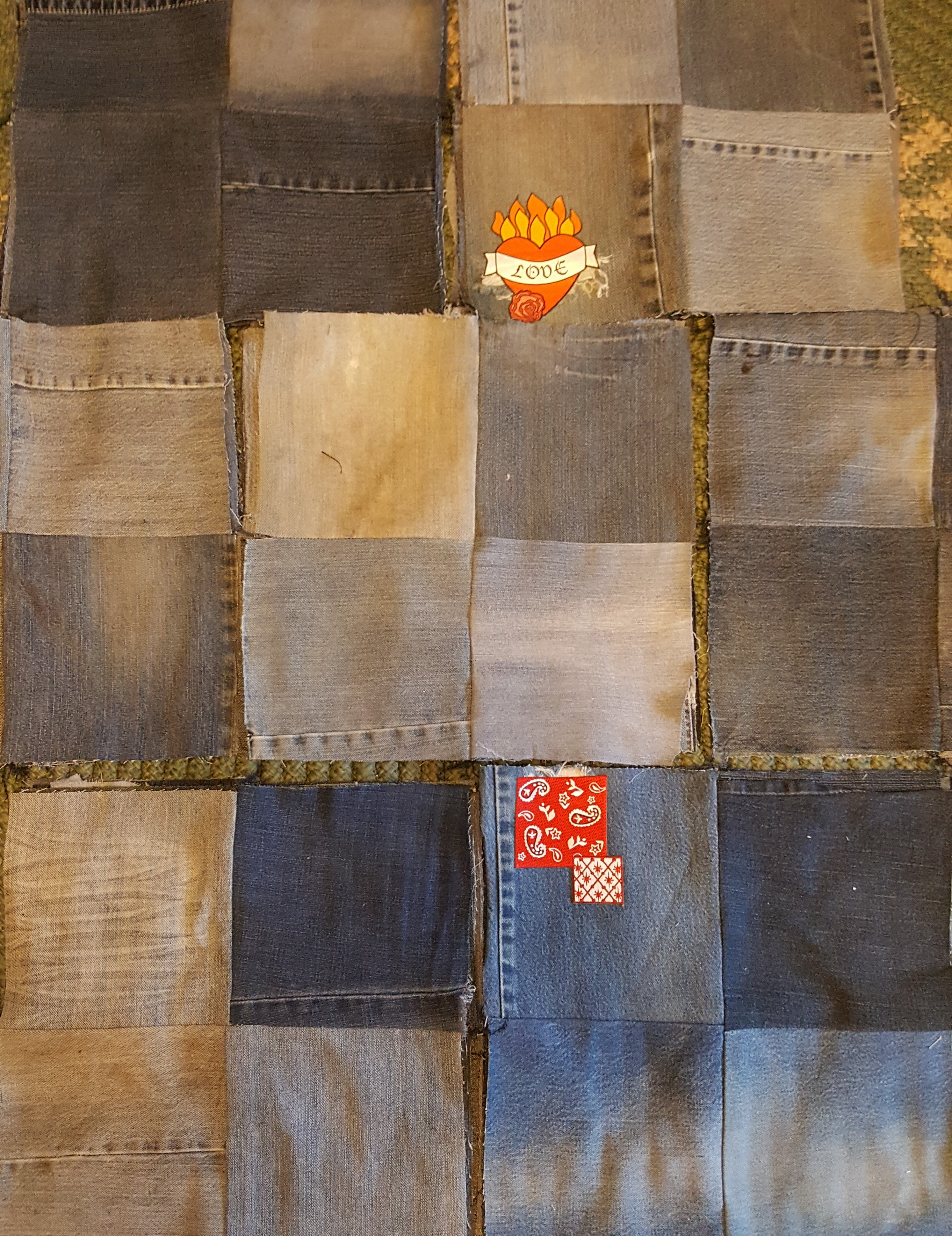
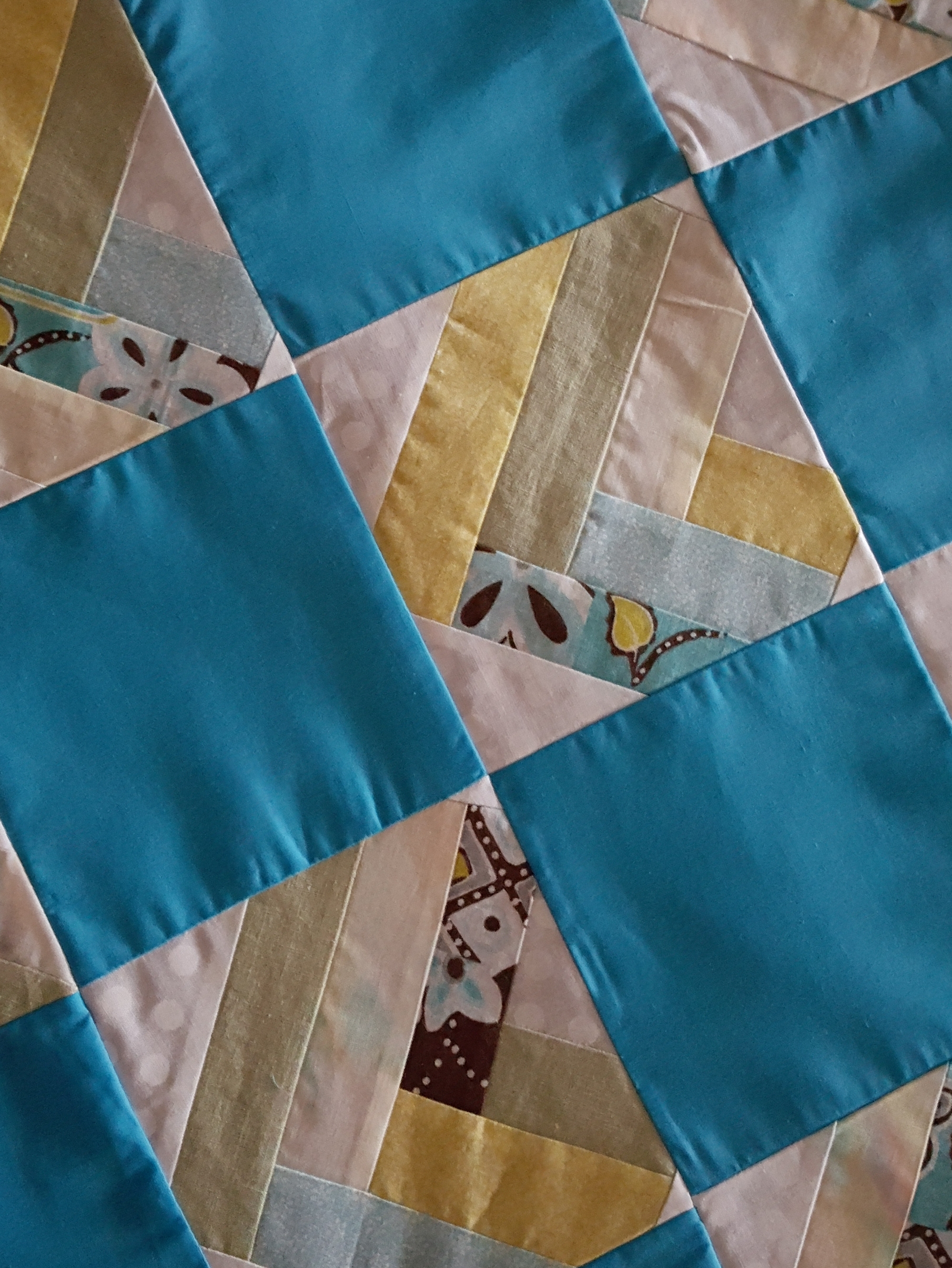
Breaking the king sized quilt into 4 patch blocks makes it manageable for a home machine. This also provides an opportunity to check the squaring of the blocks and make any corrections needed.

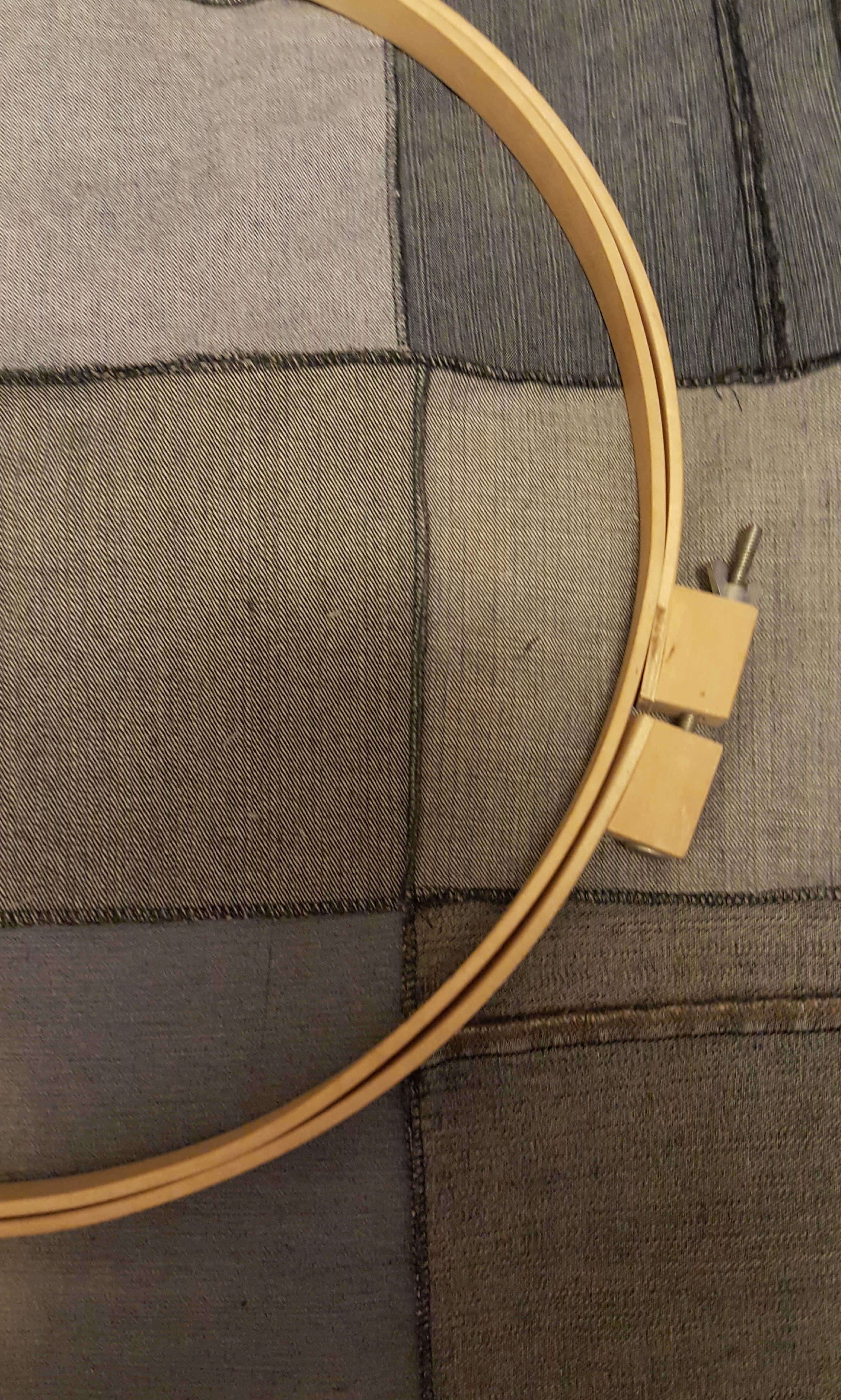
I used my White Serger to complete the piecing. I am very pleased with the quilt top and look forward to the completion of the basting, tie and binding to wrap up this project!

Thank you, as always for stopping by and spending some time with us at This Lil Pig Studios!
2018 In Review

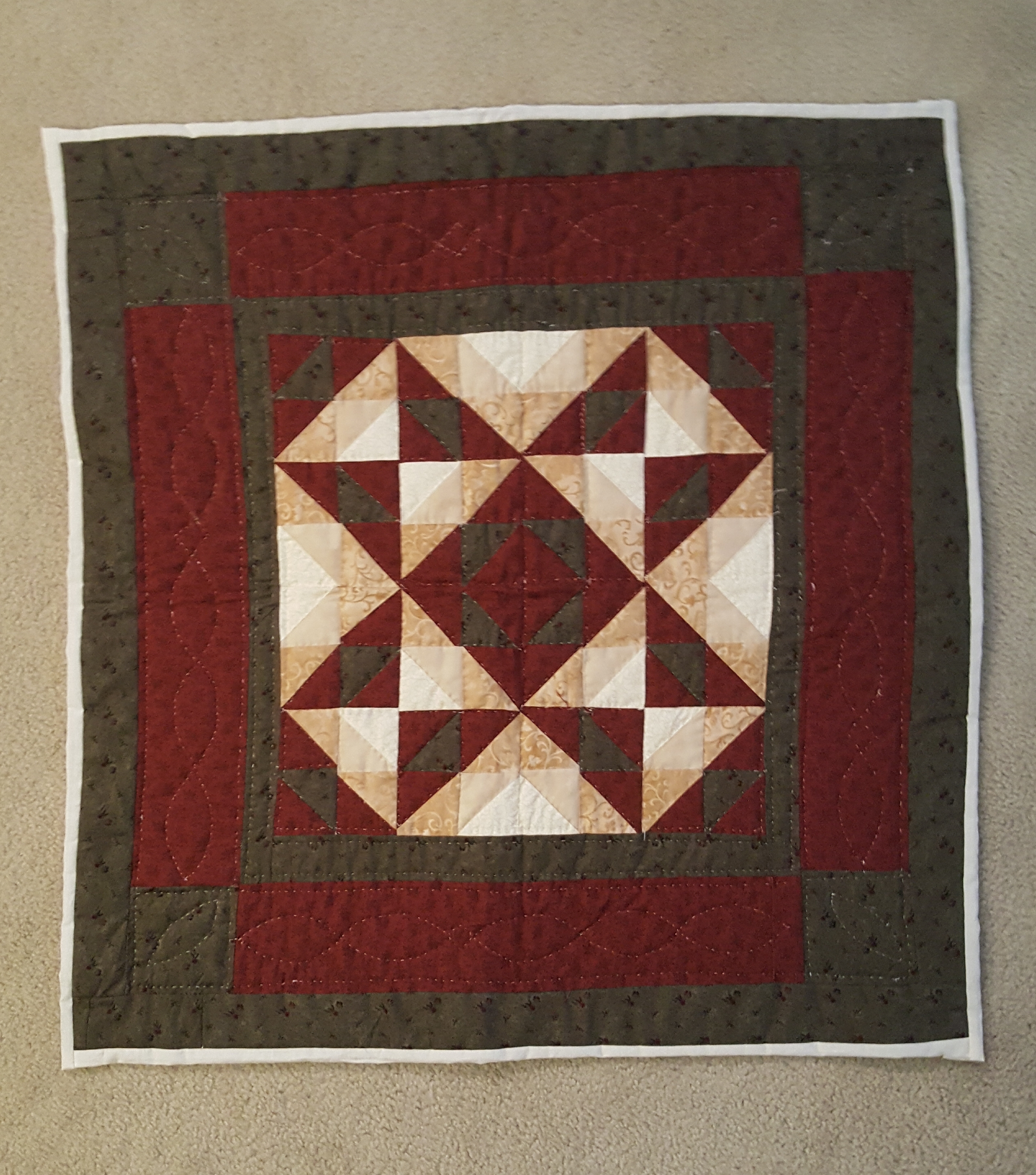
2018 was a productive year with so much change, growth and new beginnings. The new year started off with new additions and baby quilts for gifts.

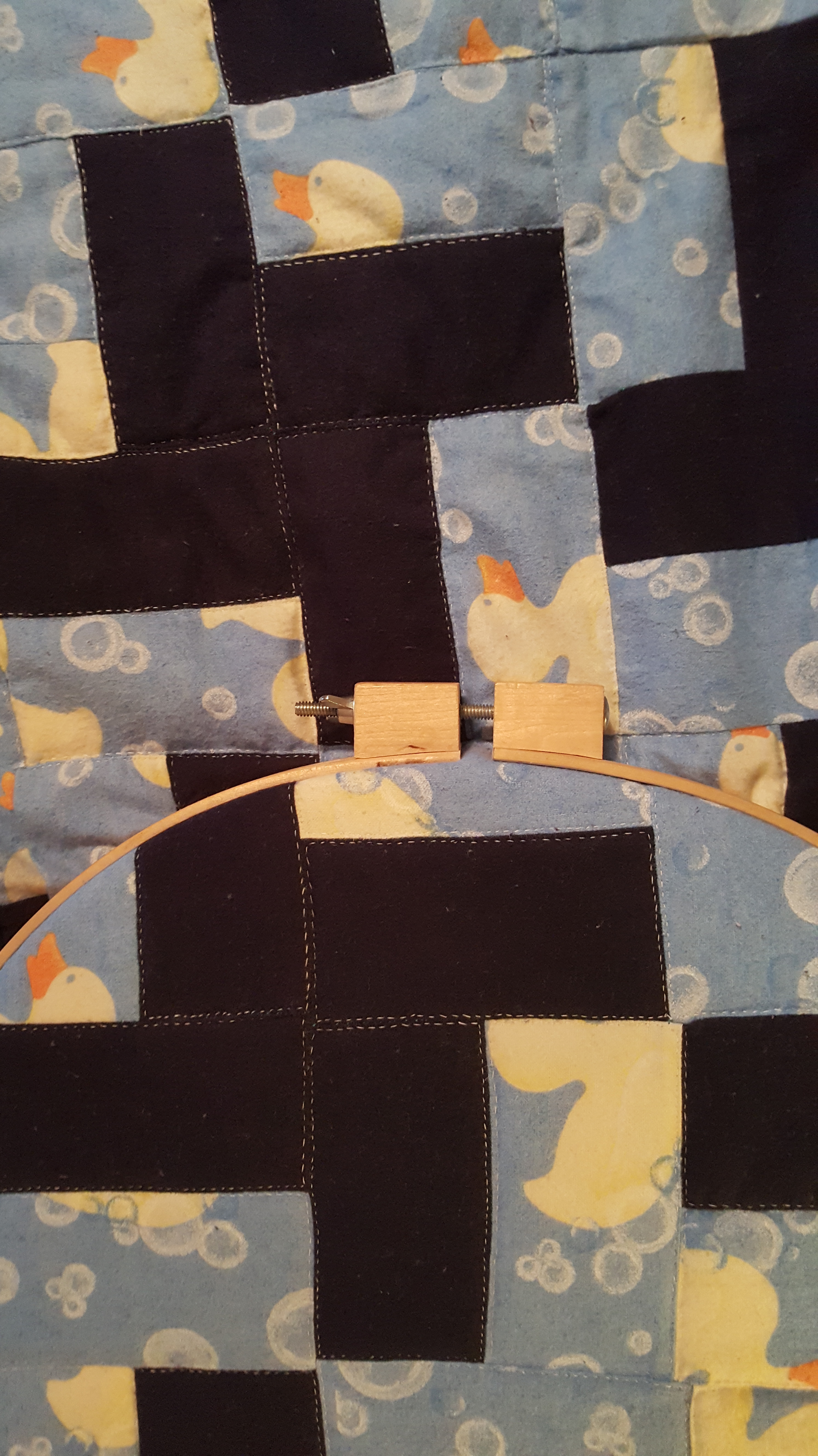
Duckling Windmills
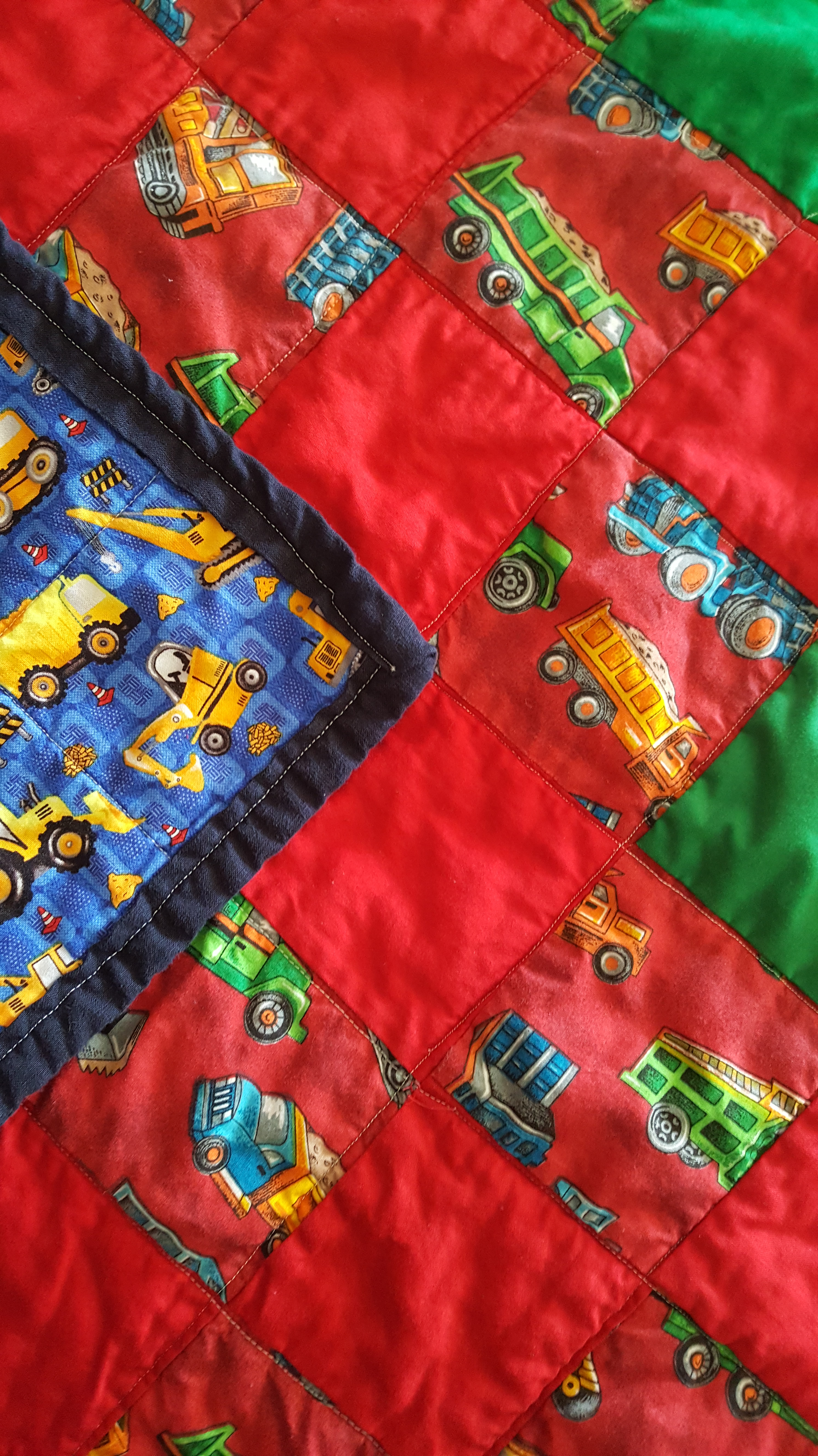
Construction Four Patch

Then there were gradations just in time for Spring!

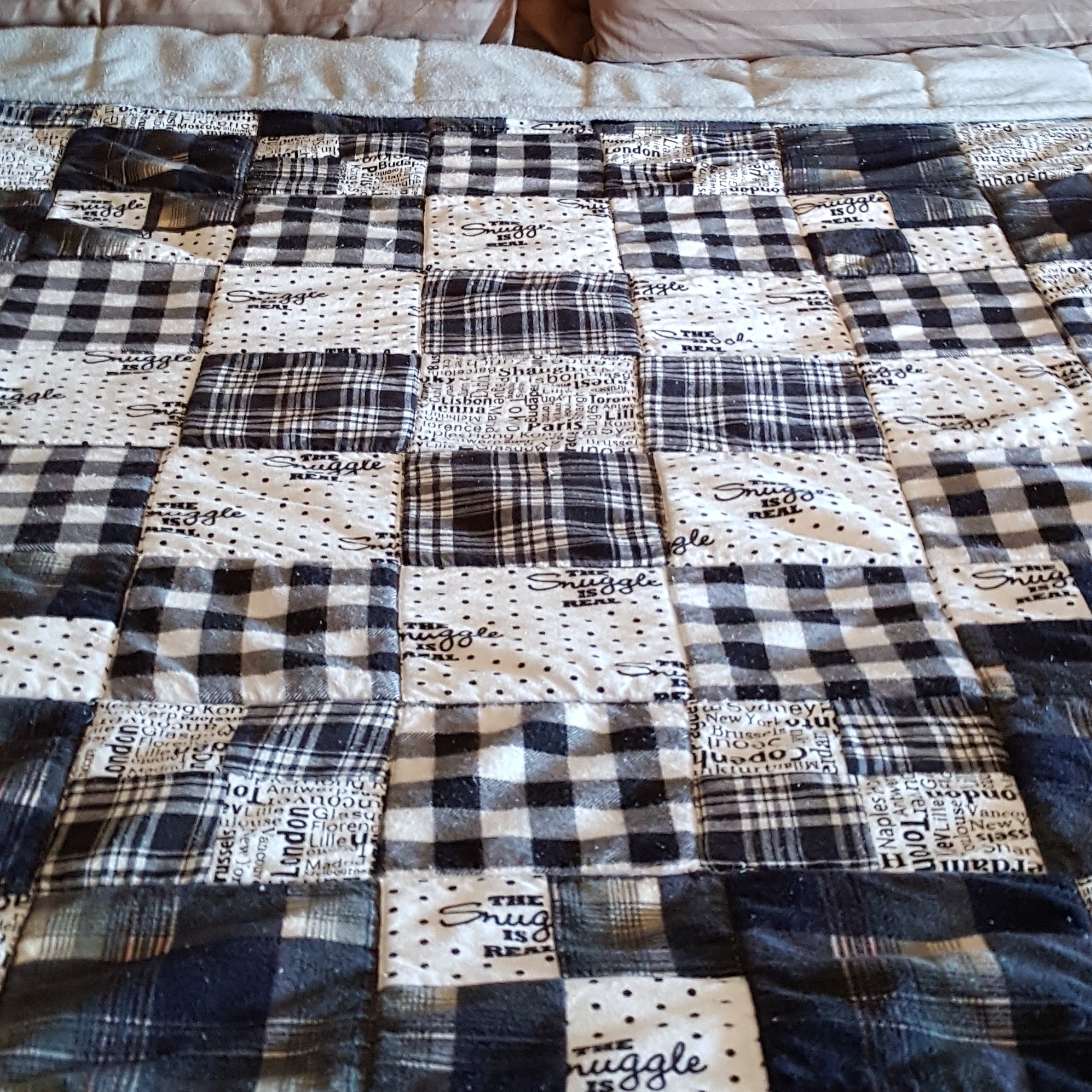
Flannel Mixed Patch
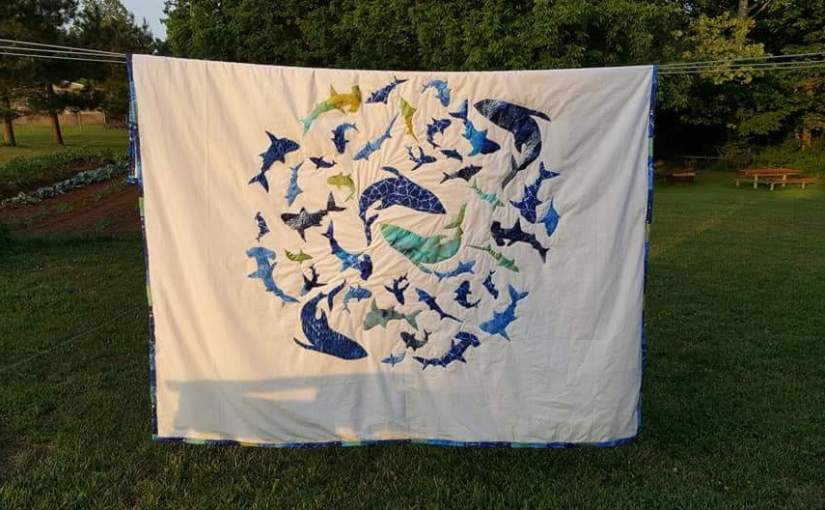
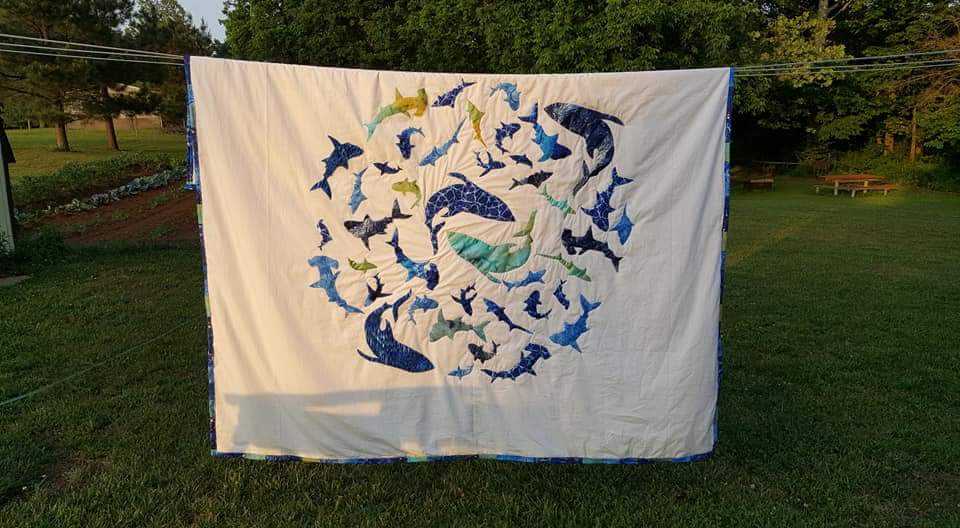
Shark Zen

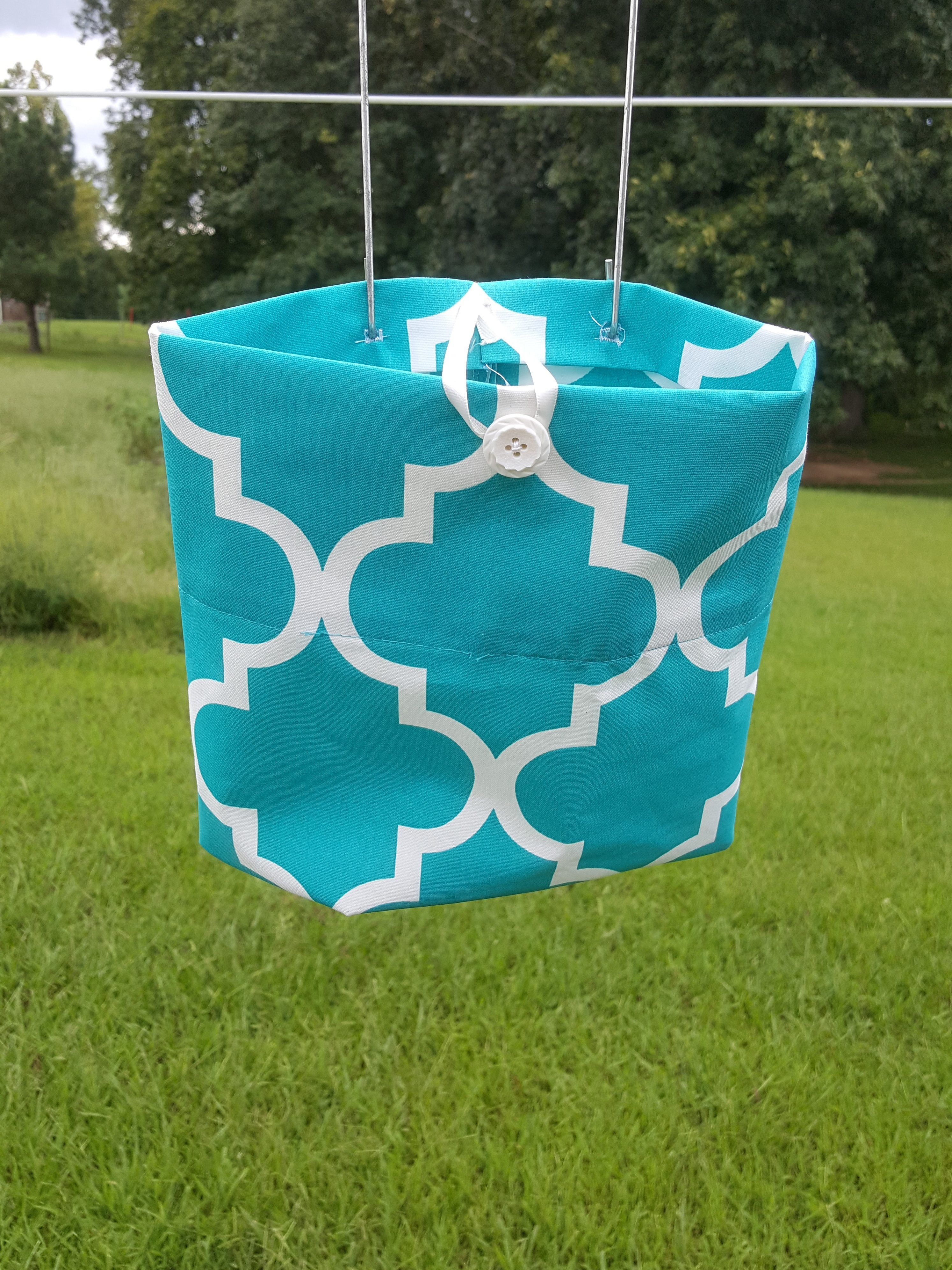
I worked on some gifts that were not quilts. Mom wanted a clothes pin bag for the line and an Autumn Wall hanging.


The Back Yard Baby had her 1st Birthday!

Bow Ties and Pin Wheels

The year wrapped up with a couple more babies to be gifted.

Log Cabin
Heart Strings

2019 promises more babies! This new blog format! And orders for custom quilts in the queue.

Thank you as always for spending some time in the Pig Pen with This lil pig studios!