We Really SHOULD Be Doing This

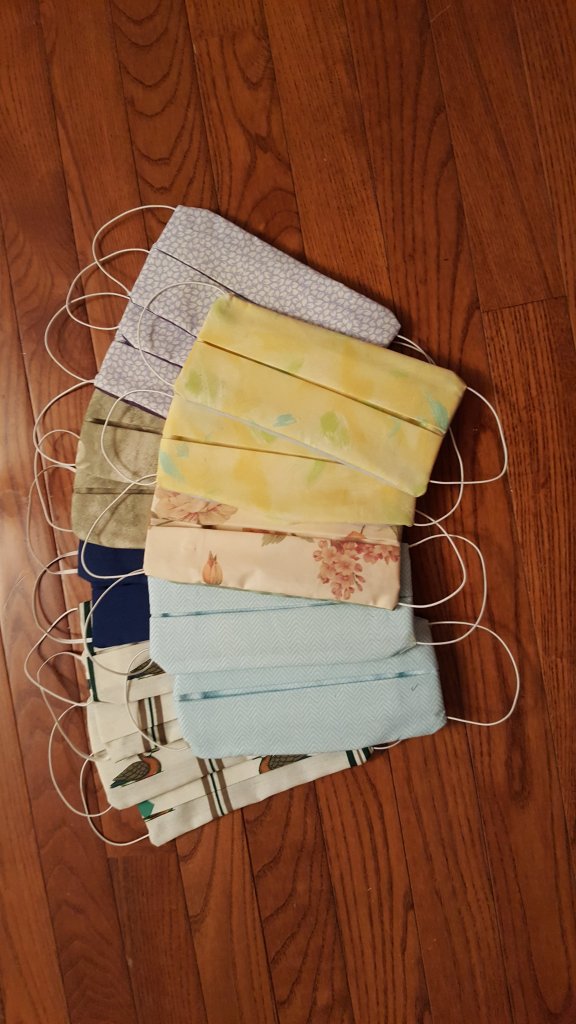
I don’t want to be making a face mask! I don’t want to be counting the people in my circle that are “high risk!” I am kicking the dirt! I’ve been in denial and procrastinating! But, I surrender, because we really SHOULD be doing this!

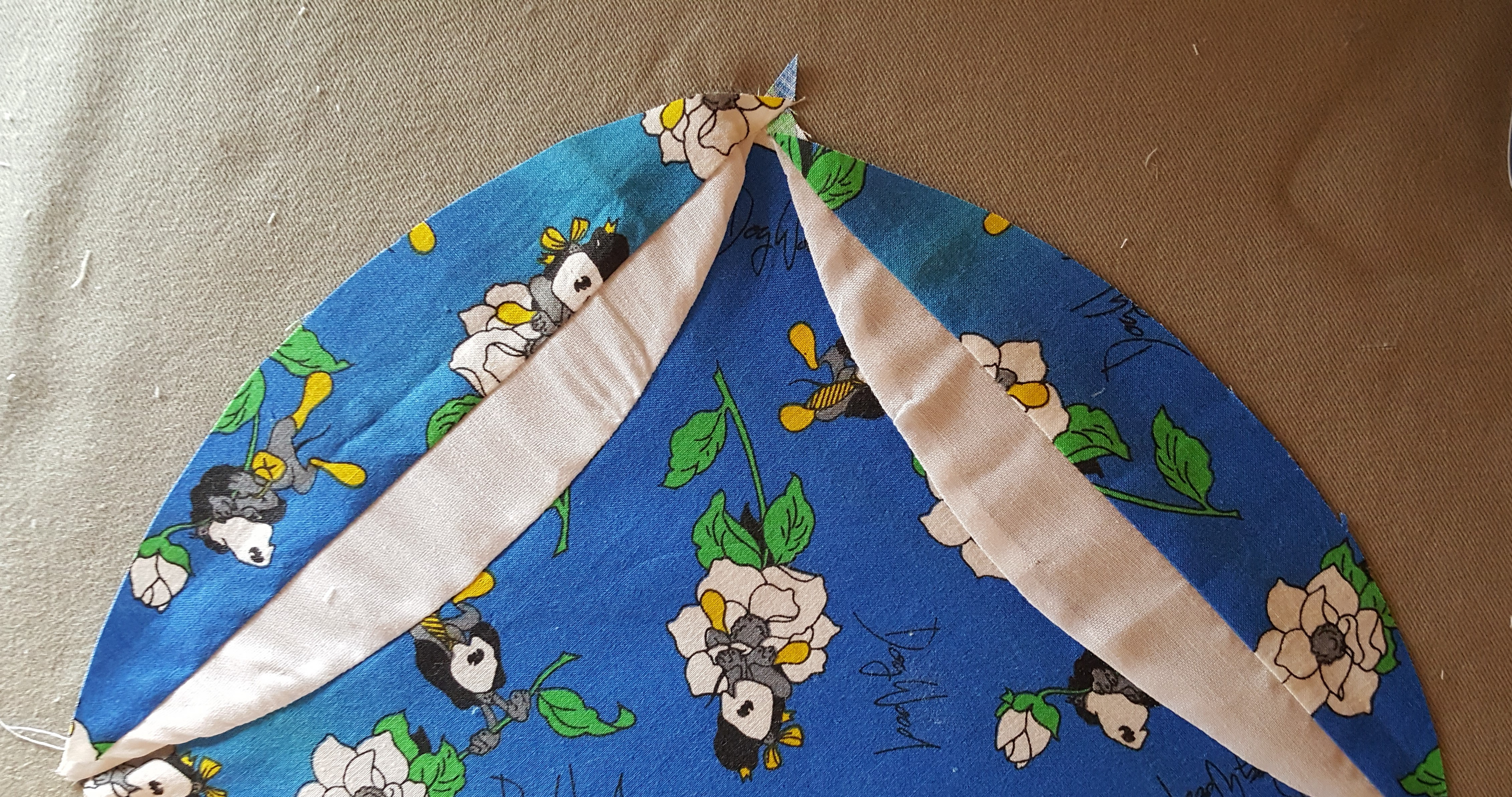
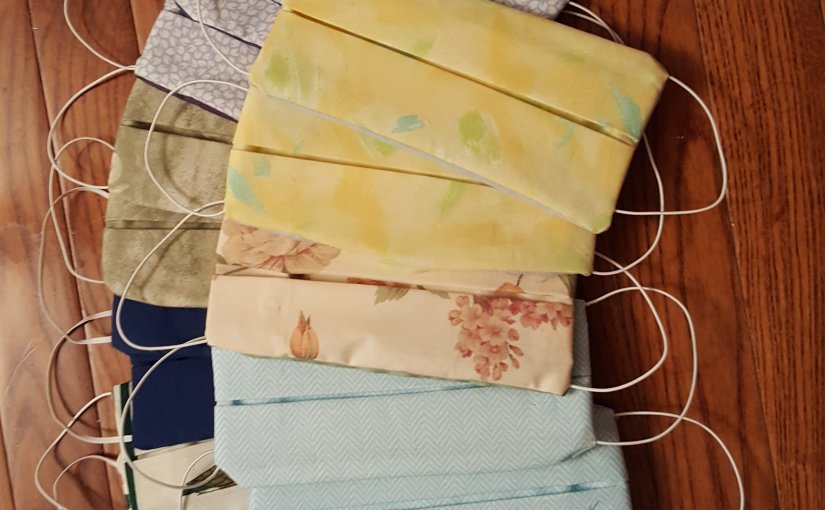
I pouted while cutting out the 8½ inch squares. I fussed while ironing the pleats. I complained to the wall while sewing straight seams. Finally, I examined the finished product with the hope they would all end up in the trash! Yes, the trash! (Never have I created with the deepest hope the outcome would end up discarded.) There was (and is) a deep hope these would become unnecessary and unneeded. These will NOT be repurposed. My hope is to never feel this again. Once in a hundred years is enough! 

So here we are, doing this; fighting is the wrong word, yet I can’t think of a better one. There is no tangible enemy, no particular group, person, or thing that can be labeled (even inaccurately) as evil to hold in contempt. This is in the very air we breathe, the surfaces we touch – and there is no known treatment, no cure, no nuke to make it stop.  

Oddly enough, our frontline defenses are people who are usually overlooked because they’ve always been deep in the trenches and far behind the scenes. They have been extraordinary heroes all along; now they’ve rightfully been brought into the light and given the respect they deserve. The CEO can’t save his business or get it phase-ready for re-opening – but his janitor can. The store shelves aren’t stocked by the boardroom, but by truck drivers delivering on schedule and essential retail staff. LPNs, CNAs, and RNs are keeping hospitals open and facilitating end-of-life communication in ways that no one foresaw.

So, who am I to kick the dirt? As I reflect while sewing, the words “ungrateful, entitled, AND little bitty” come to mind. I surrender to the current circumstances and release denial and procrastination. 

Whether we follow the WHO, the CDC, or some level of government, it’s now a COVID-19 world, and the new “normal” requires a face mask. We may not like it. It may be uncomfortable and inconvenient. It may be the current bane of our existence. So, why? Why wear a mask? 

Put on a mask out of love and respect. The older Veteran down the street you have your morning coffee with – he’s high-risk due to his age and exposure to Agent Orange. Your aunt who you pick up your favorite cookies from – she’s high-risk because of cancer she’s been battling for three years. The little girl down the street you take to dance class with your daughter – she’s high-risk because she’s survived a rare blood disease through eight years of fragile life thus far. You understand, I know you do. Put on a mask, if not for your health, for the safety of those folks who have a place in your heart.

With that being said, there are a lot of versions of the face mask; and a multitude of ways to get one. You can make your own with many options – sew/no-sew, tie back/elastic straps, over the ear/behind the head, with/without HEPA filter pocket, options beyond options. Makers of all sorts have brought out sewing machines, hot glue guns, scrap fabric, and elastic strips to contribute to the cause. The internet is filled with how-to/DIY videos and patterns.

If you’re not quite feeling crafty, there are also a plethora of ways to obtain one. There’s site upon site on the internet offering them in a wide assortment of colors and styles. You may find them in many price ranges, but there are also those people out there offering them for free – for the good of our communities and as an offering of “doing their part” in the world’s fight against this unseen enemy.
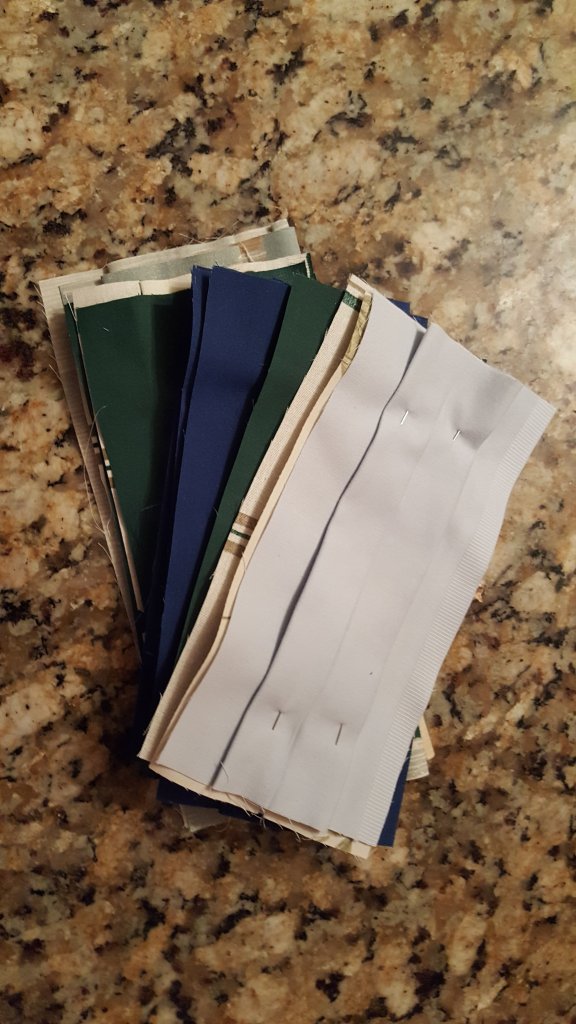
How to request your free one: comment on this post, Facebook, Instagram, or BlogLovin.

As always, Thank You for spending time with us at This Lil Pig Studios!
The Road to Oklahoma

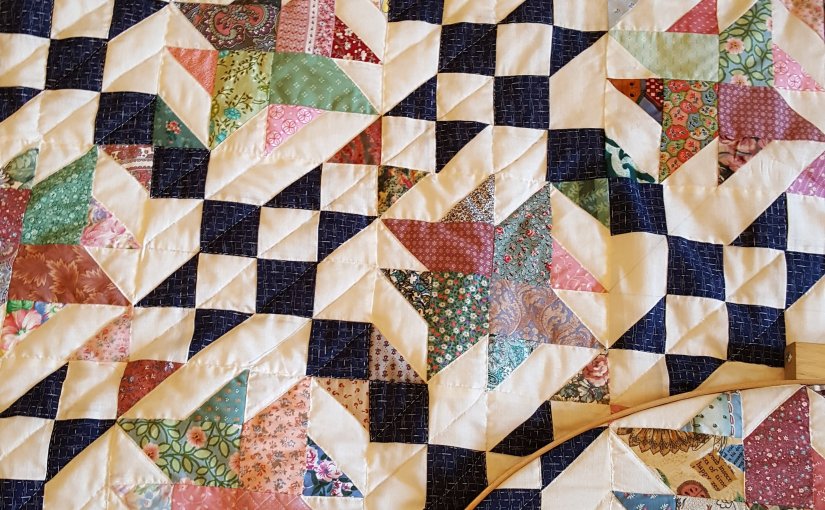
Some projects bring great joy – they are celebrations of birth, graduation, wedding, anniversary – happy and hopeful times associated with every stitch. Some projects are memorials to loss, restoration in every stitch respecting the process of grief. Then there are projects of healing. These are not beautiful; they are not cherished until there is space to look back with reverence at the lessons learned. 

Everything had to be put on hold, and a project of healing was needed – one that is not promised to anyone. The mistakes and inconsistencies are completely acceptable because this quilt isn’t “for” anyone. This quilt is to put hurt, fear, and forgiveness somewhere that is tangible. These stitches are cathartic and healing. The starts and stops, the tear stains, and strains of not being careful show in the work. There is not a seam ripper in sight to re-do an errant run. No, the acceptance of imperfection, forgiveness for yourself, and forgiveness for others belongs there. There is a time for high-quality work – a time to strive for as close to perfect as possible; but not when you are healing. Acceptance, allowing yourself to break and heal, and then break and heal again is completely necessary. 

I suppose sharing this is being vulnerable. Some may not understand; but in such a fragile time maybe it is okay to say something is “too much,” and it has to go somewhere else. Find your quilt, your project, your art, and pour all that uncertainty into it without asking it to be anything but a reflection of the time of healing that you needed to get your feet under you for the next opportunity, challenge, chapter. Bless the journey and the Road to Oklahoma or anywhere else for that matter.

Thank you, as always, for spending some time with This Lil Pig Studios

Gift of Hand Quilting

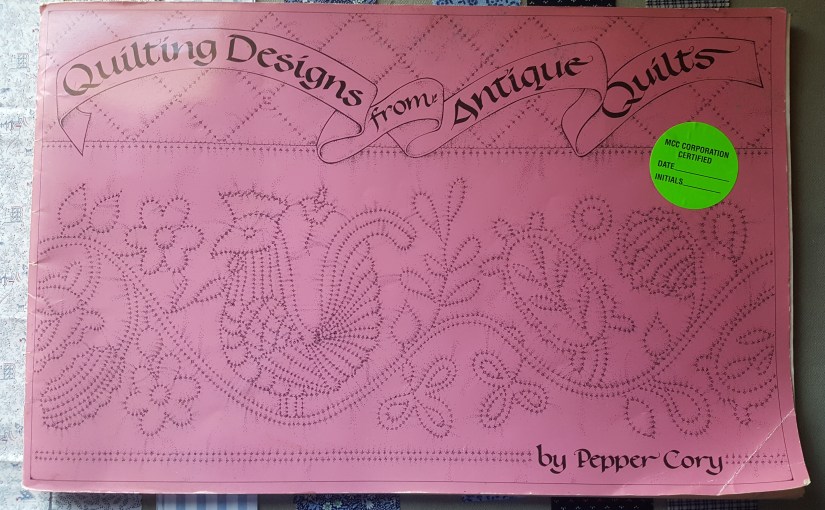
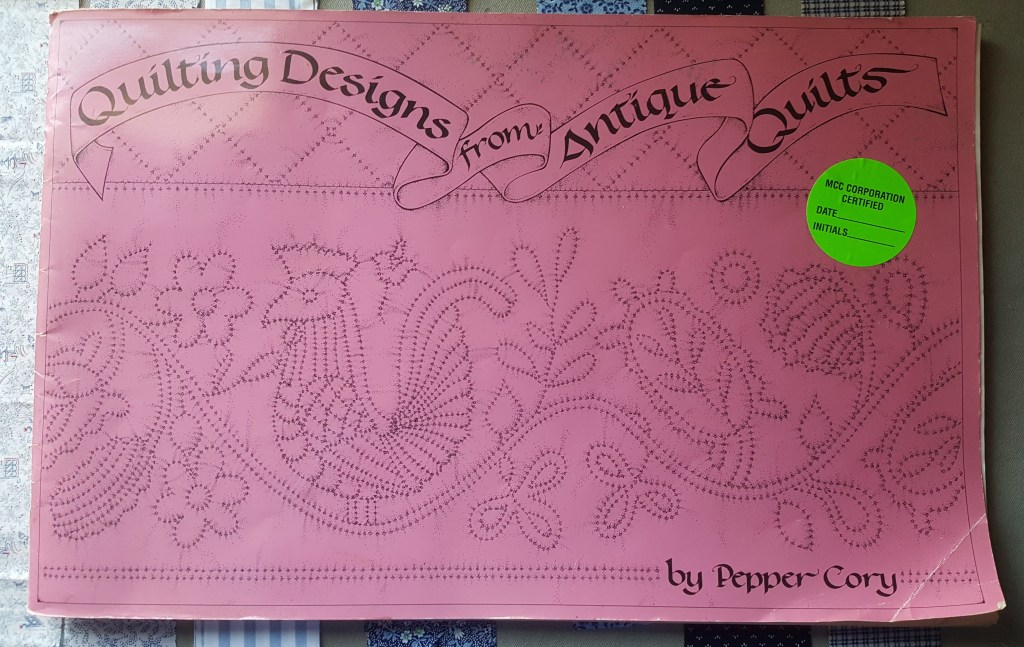
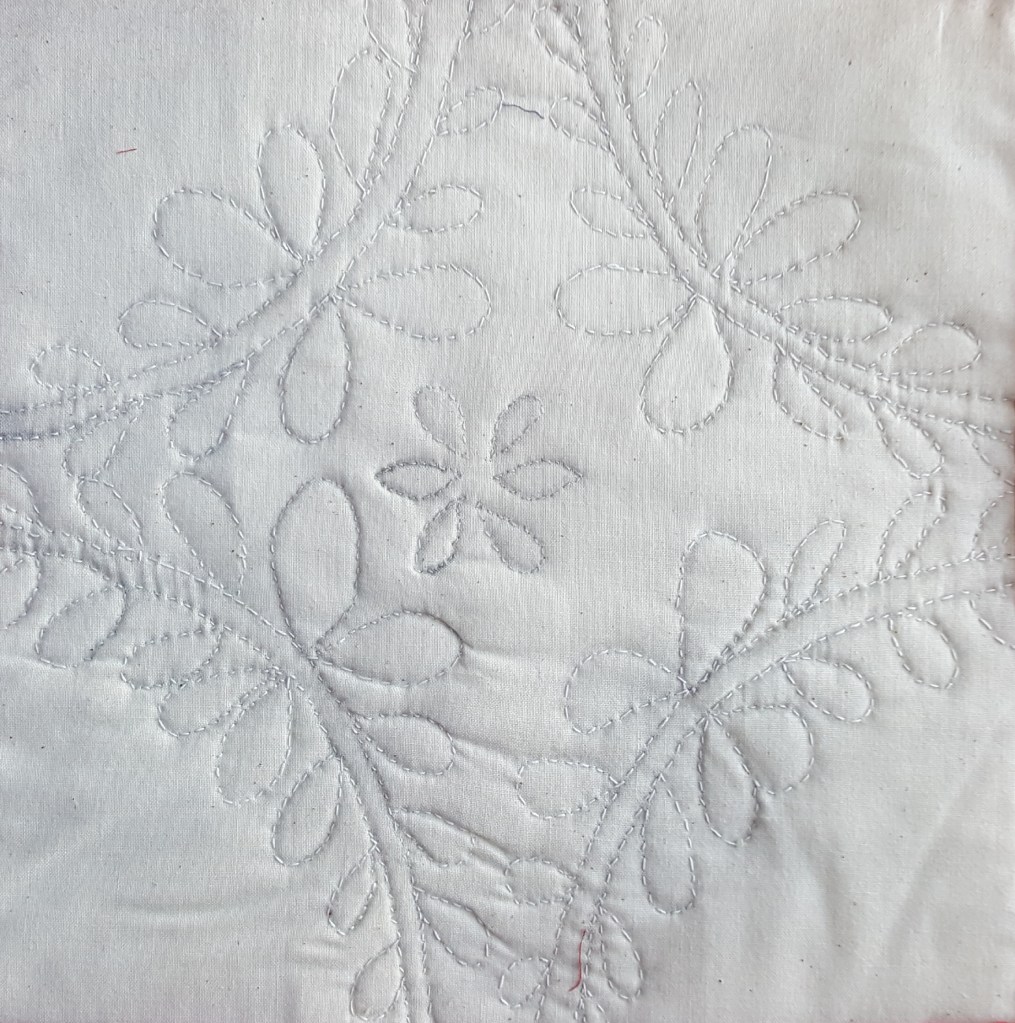
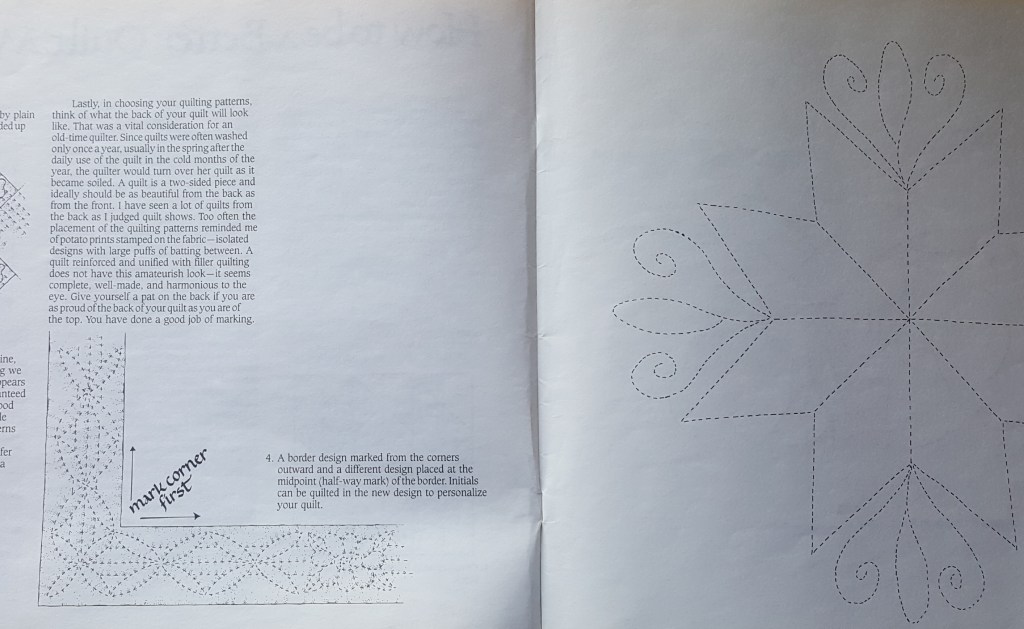
My Mom found a book of hand quilting patterns on one of the flea market outings, and she gifted it to me for my birthday. I have spent a week transferring the patterns to transparent plastic stencils. I have most of them ready for use and marked for border or block size. I think the best use of these would be a whole cloth quilt, but that will have to wait. There are open projects ahead of that.

I have hand quilted all but one of the quilts I have pieced. I think my stitches are even and relatively small, but that is only my rookie eye. Antebellum era quilts were expected to display 10 to 12 stitches per inch. Yes, 10 to 12 stitches per inch, and it recommends counting the weft and warp threads for even stitching. For perspective, weft and warp threads are the tightly woven threads that make cloth. Look closely, very closely – all natural cloth is made of threads woven. That is what they recommend counting. Small stitches are an understatement!

Why? you might ask. I am going to speculate, because firsthand accounts are not available at this point, and I have not found the documentation to prove my hypothesis. First, quilts were typically used extensively, and constantly reminding a child or loved one to be careful not to pull a thread was not practical. Such small stitches are not going to pull, break, or snag easily. Second, by adding thread the fabric is stabilized. More thread, more stable. Lots of quilts were made from worn garments, bedding, and feed sacks that were worn out from the previous uses. These are utilitarian reasons, and ones I think to be valid. Third, I think there was a personal pride in mastering the small, even stitches. It is not a stretch to imagine the ladies around a quilting bee comparing and coaching the younger ladies to master this level of hand quilting. 

My Grandmother could quilt that scale; in fact, I don’t think she even thought of it. If she was counting threads, it was so second nature that she probably was no longer conscious of it. I have made myself a scale, and with these “new” templates I am going to make a sampler. I have no doubt I will need my seam ripper and need to start again and again. I am determined to learn these skills to make quilts that are beautiful, loved, and useful.

In the book there are in-depth descriptions of where patterns came from – antique stores, auctions, museums, collections. Amish quilters seem to have providence on the meaning and source of the patterns used. Some are lost to history and appear to be the fancy of the quilter. Some are very symmetrical and some are artistically drawn with whimsy. The hidden stories of quilts are part of what draws me into each one. The patterns have meaning; the color selections add another level of meaning; and to complete the story, a quilting pattern is used to literally and figuratively tie it all together.

I will continue to update you on the treasures I am learning and skills I am developing.

Thank you, Mom, for knowing that I would love an old quilting book!

Thank you, as always, for spending some time with This Lil Pig Studios!

Time to Chat

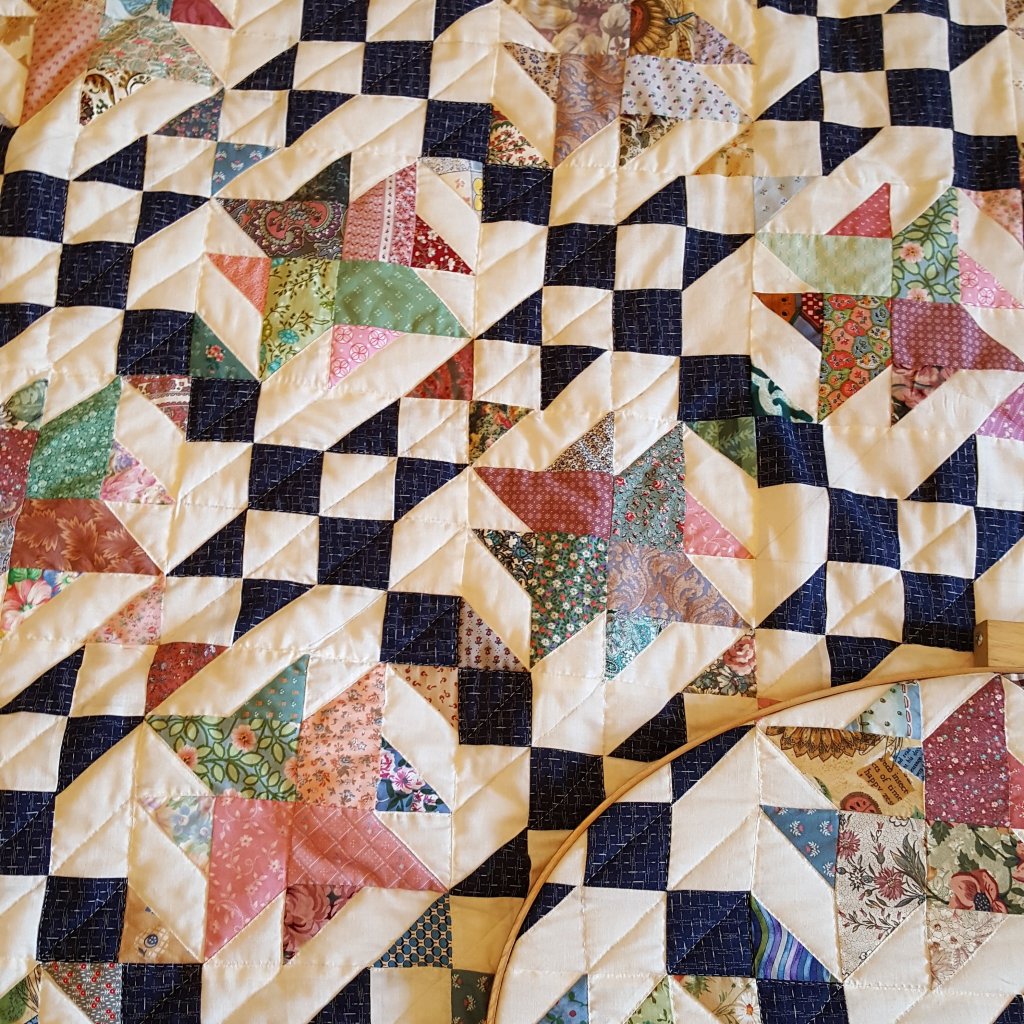
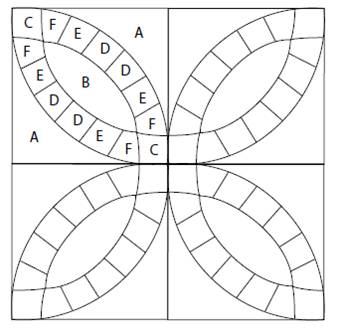
I have been single-mindedly focused on a king-size double wedding ring quilt which was commissioned and have dropped the ball on everything else while working on it. However, I am down to the short rows on having it completed after a relatively quick turnaround of only 6 months. Yes, it takes 6 months to cut, piece, baste, hand quilt, and bind a king-size quilt.

Let’s be really honest about what has to happen for a pieced and hand-quilted quilt to be created. After a design and size is chosen, the fabric has to be pulled from the stash and measurements made for what needs to be purchased to complete the project. Then there is the shopping – I know it seems like every color and print is available, but it is not. There are colors and scales to be taken into consideration. Does the quilt have a theme that needs to be followed?

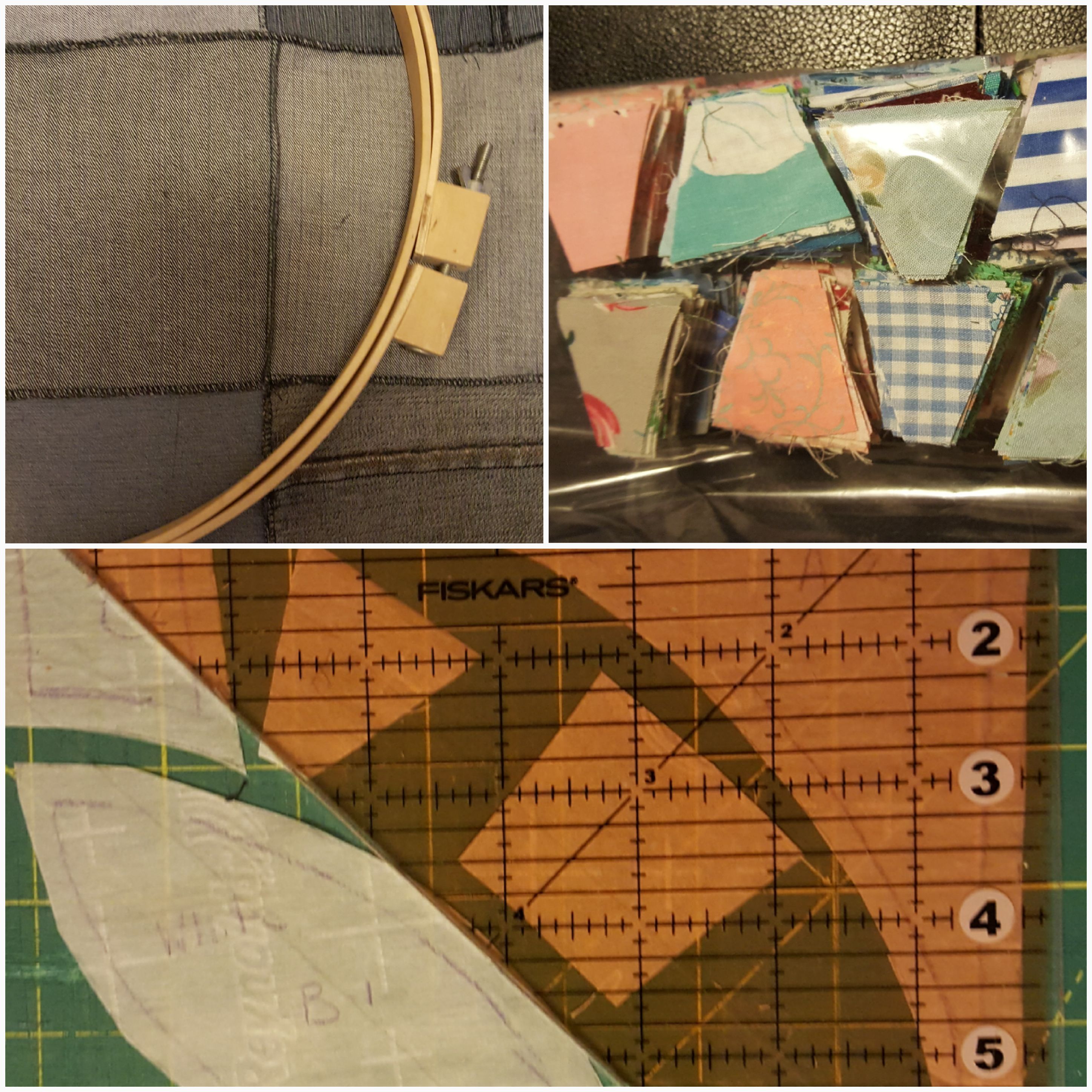
When the supplies are all gathered, the cutting can commence. I utilize a rotary cutter and self-healing pad, rulers, and templates to standardize the cutting. To ensure a fresh start, I clean and maintenance my machine, replace the needle with a new one, and get my threading started. I try to chain piece as much as possible to conserve thread. Then I iron, sew, iron, and sew. I test the layout as I go to check the flow of pattern and colors. And finally there is a quilt top!

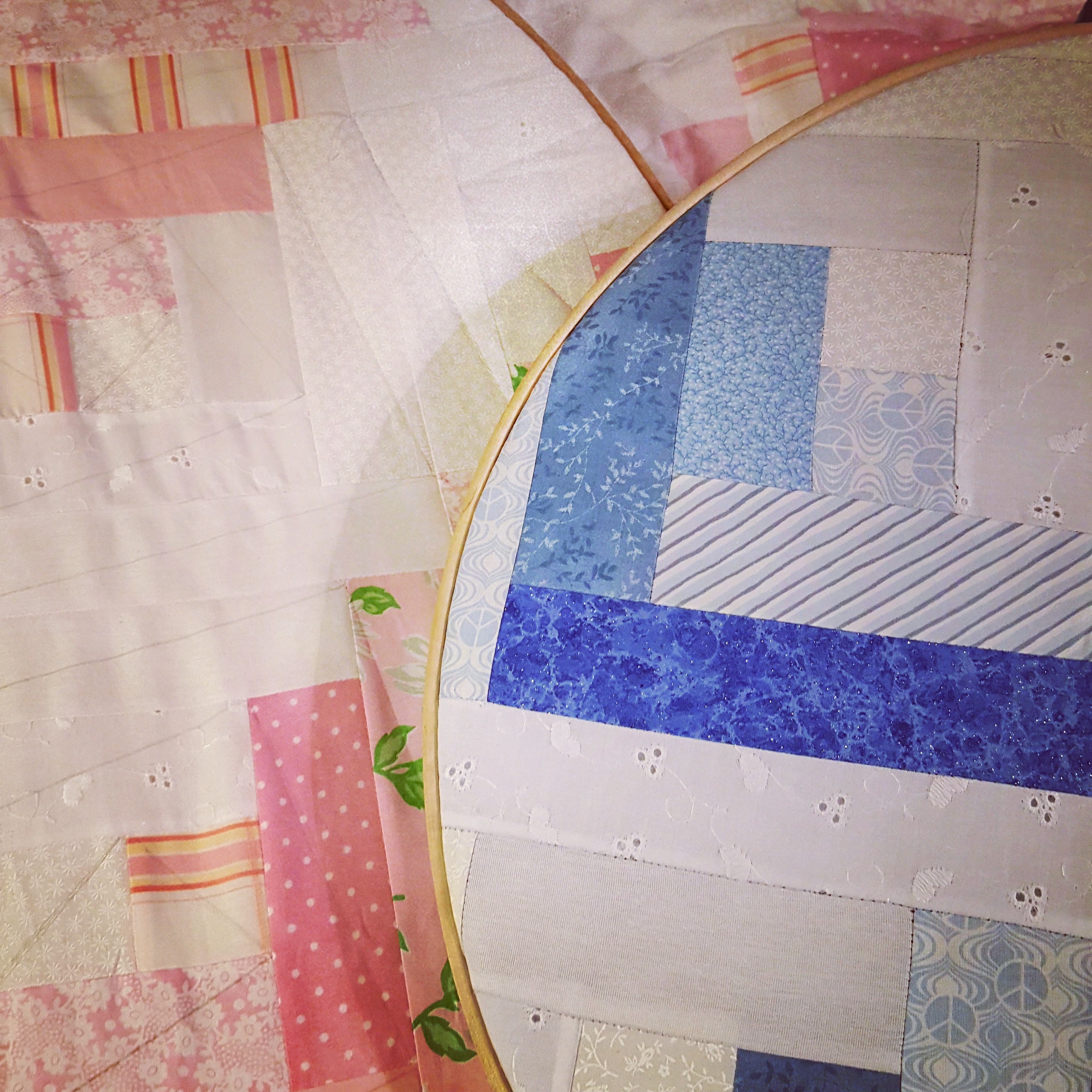
The quilt top gets sandwiched with batting and the quilt back. At this point there is basting. I typically put a stay stitch in each block to hold it all together while I hand quilt one hoop section at a time, starting at the center and moving toward the edges. Once it is quilted to the edges, the binding is applied, and I label the quilt.

If you are considering a handmade quilt, know that you are getting an investment. They do not happen overnight, and there is a lot of work and hours in every step of the process. A handmade quilt is a precious gift and an heirloom in the making.

Now back to the business of working on projects and sharing the happenings at This Lil Pig Studios!
Color Theory 101

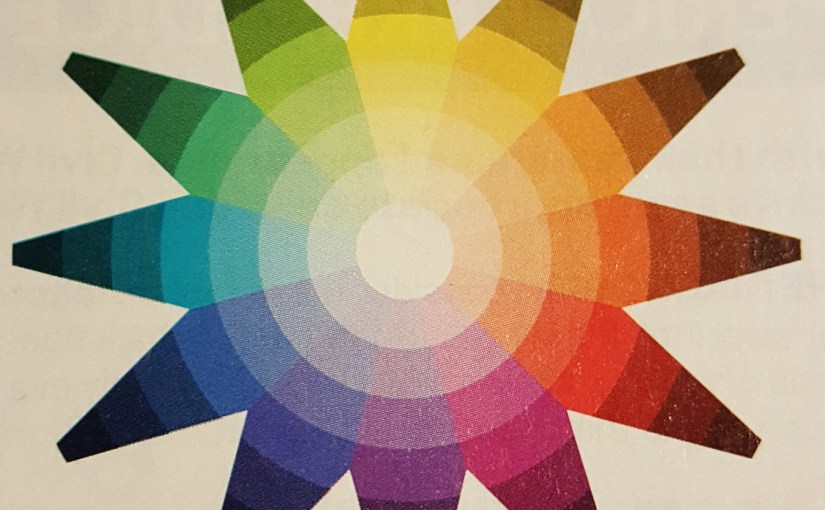
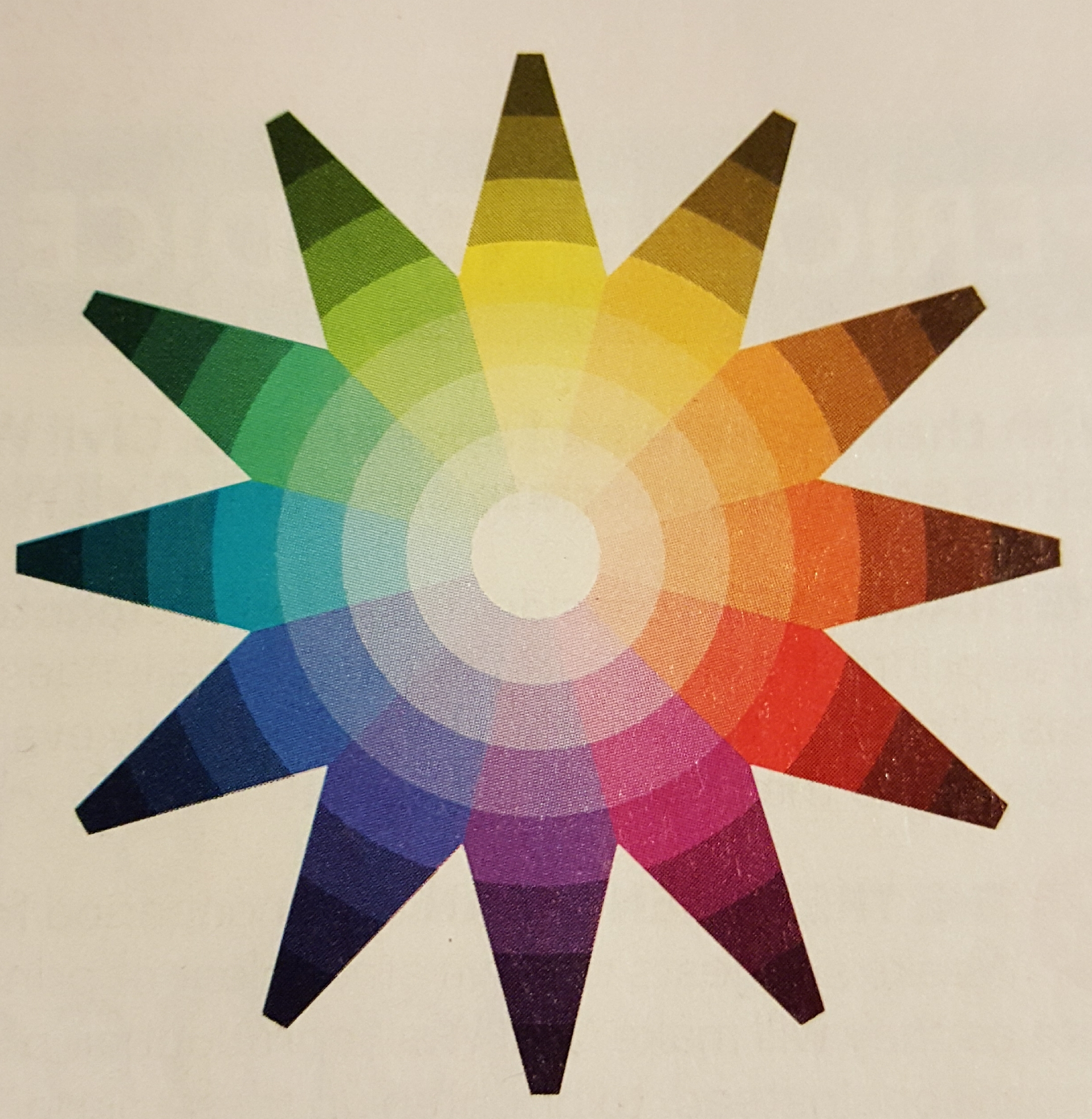
Color Wheel Circa 1985

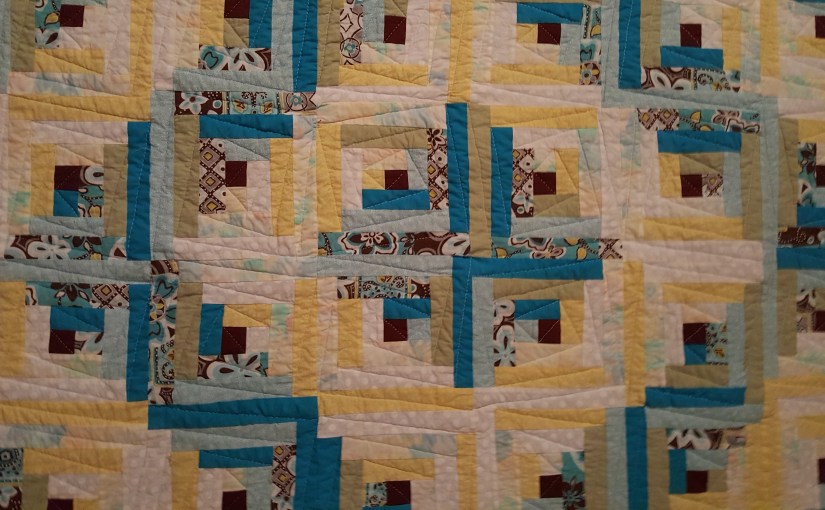
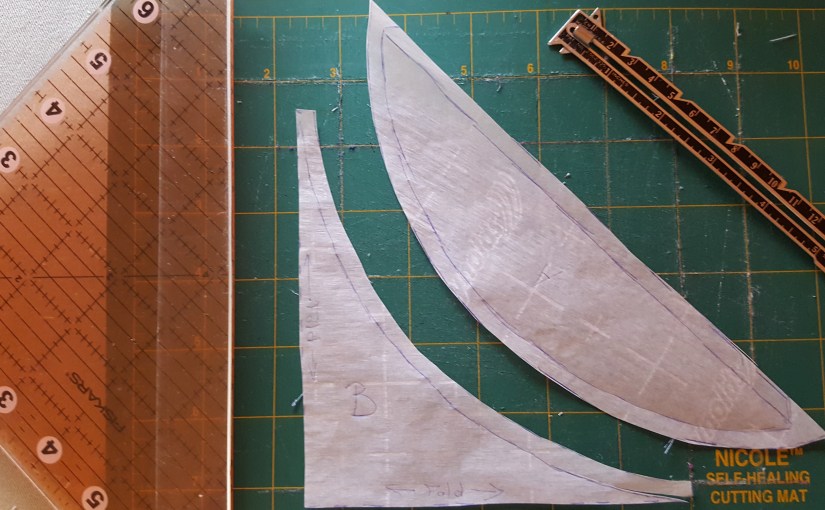
Let’s start with the most intimidating part of starting a new quilt project – color selection. If you are not working from a kit, where the fabric selections have been packaged for you, then you are faced with making these selections for yourself. This is both the beauty of creating and the most paralyzing if you are not bold in the fabric selection. Fabulous fabric selection and placement can create an optical illusion that can multiply the beauty of a quilt and poor fabric selection can make a well pieced and quilted project appear mediocre. So where to start?

The first quilts I made were completely scrap quilts out of hand-me-down fabrics and left overs from craft projects. Big plus side is there is no wrong way to scrap, there is little to no investment monetarily, and most importantly, experimenting to learn color selection. Yes, experiment! Put colors and patterns together and look at it. Complimentary, contrast, solid, stripe, floral, graphic print all play together differently. Look at it from 18″, through the sewing machine, look at it from 4′ standing over it, look at it from 10′ away. It is important to take into consideration the perspectives and decide what you like. Self awareness will help make the quilt reflect what you are wanting to express.

You either just found that completely liberating or recoiled and want there to be a formula for fabric selection. If you are repulsed by the thought of experimentation, there is great news! Very talented artist over the years have documented and studied how we perceive color, pattern and scale. Following a few rules (that are meant to be bent and occasionally broken) the guess work of color and fabric selections has been narrowed.

Over the next several posts we are going to discuss each of these rules at length. Disclaimer, I am not a trained artist, I have not professionally studied color theory, I am not the leading expert on all things fabric selection but I am learning and want to share this with you to hopefully make diving into that project less intimidating and that trip to the fabric store or stash more productive. Thank you for spending some time with us in the Pig Pen at This Lil Pig Studios!

Robbing Peter to Pay Paul

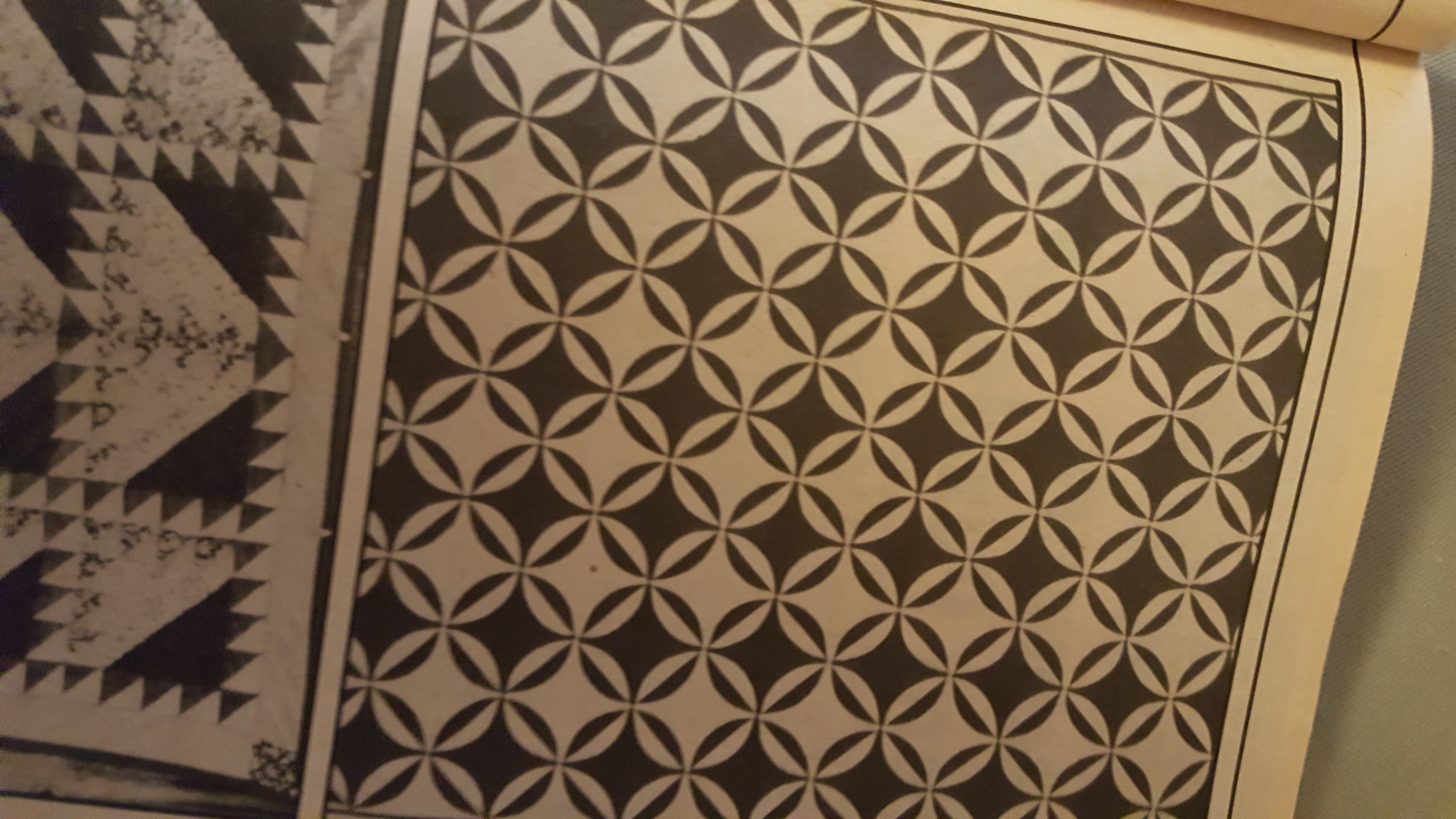
My Mother tagged me in a quilting hack video for the Robbing Peter to Pay Paul quilt and it piqued my interest. So I delved into the collection of quilting magazines that I have looking for some direction. Yes, a paper magazine with black and white pictures and graph paper patterns.

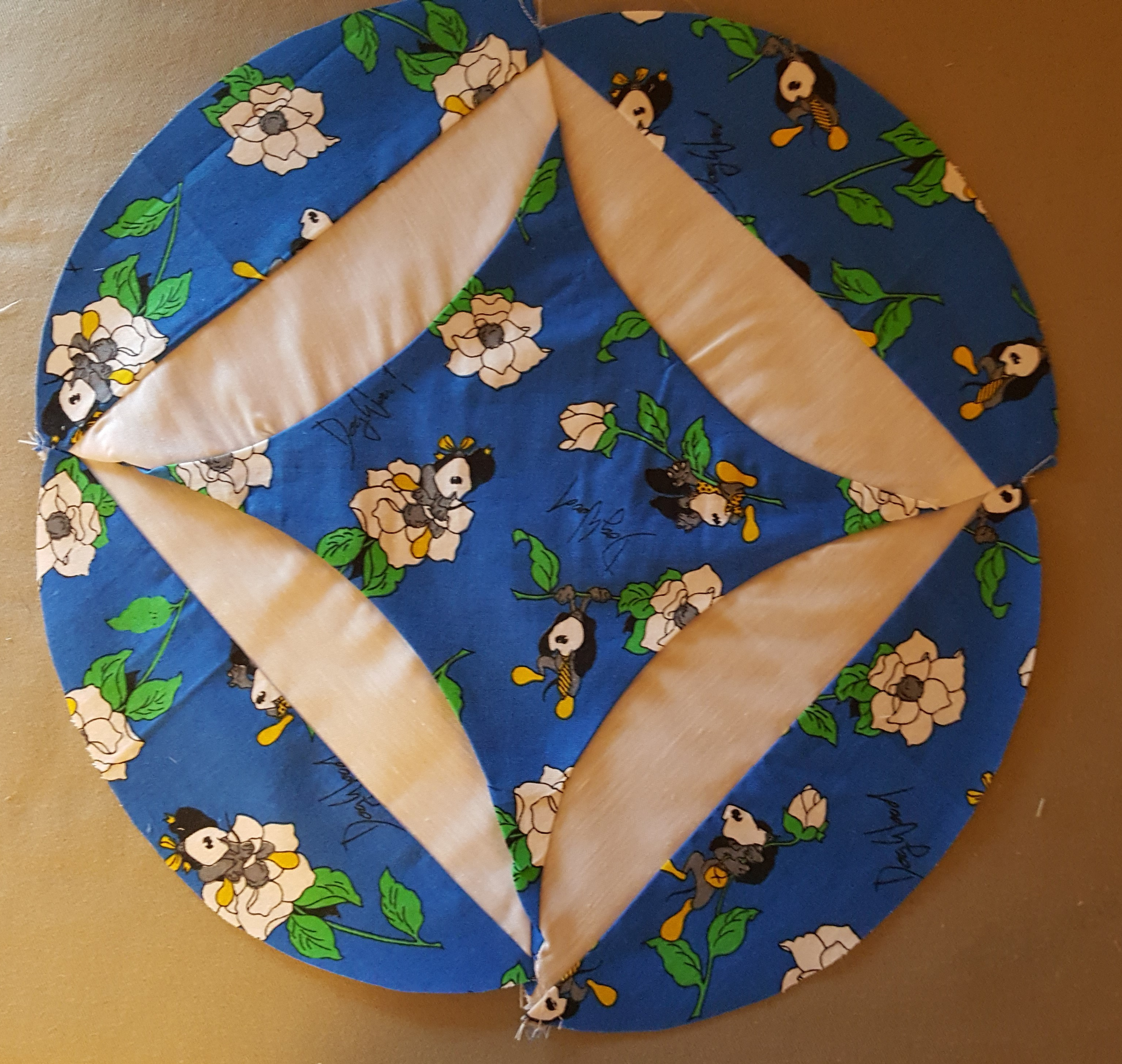
Let’s go back to the beginning, way back. The term Robbing Peter to Pay Paul dates back to 1296 in the Science of Cirurgie of Lanfranc of Milan in reference to the taxes that were required to be paid to Saint Paul’s Cathedral of London and Saint Peter’s Cathedral of Rome. With the Reformation, London parishioners neglected paying Peter’s tax to pay Paul’s. In subtle, gentle fashion women put this rebellion into their blatantly domestic voice – a quilt. I might be obsessed.

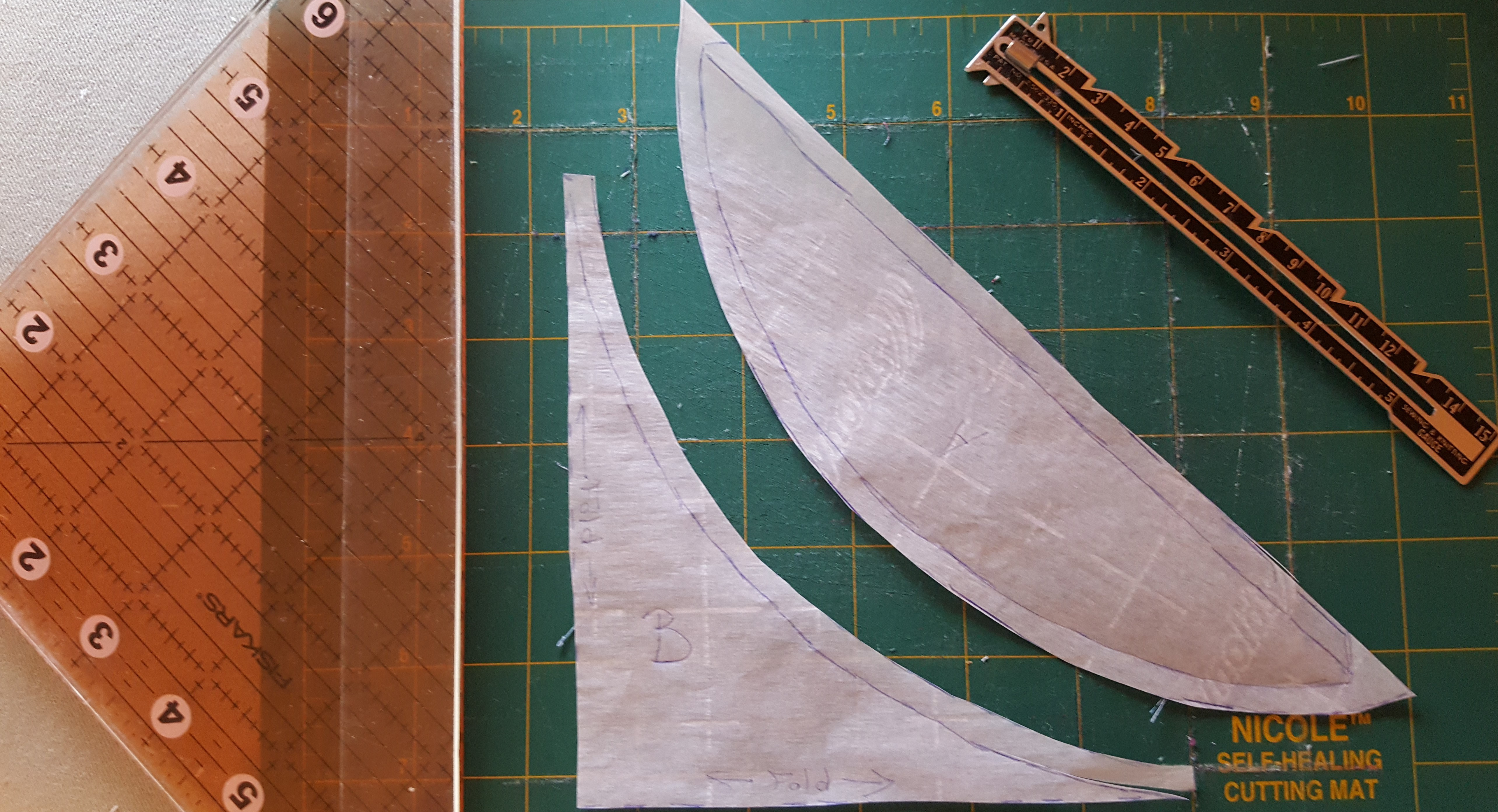
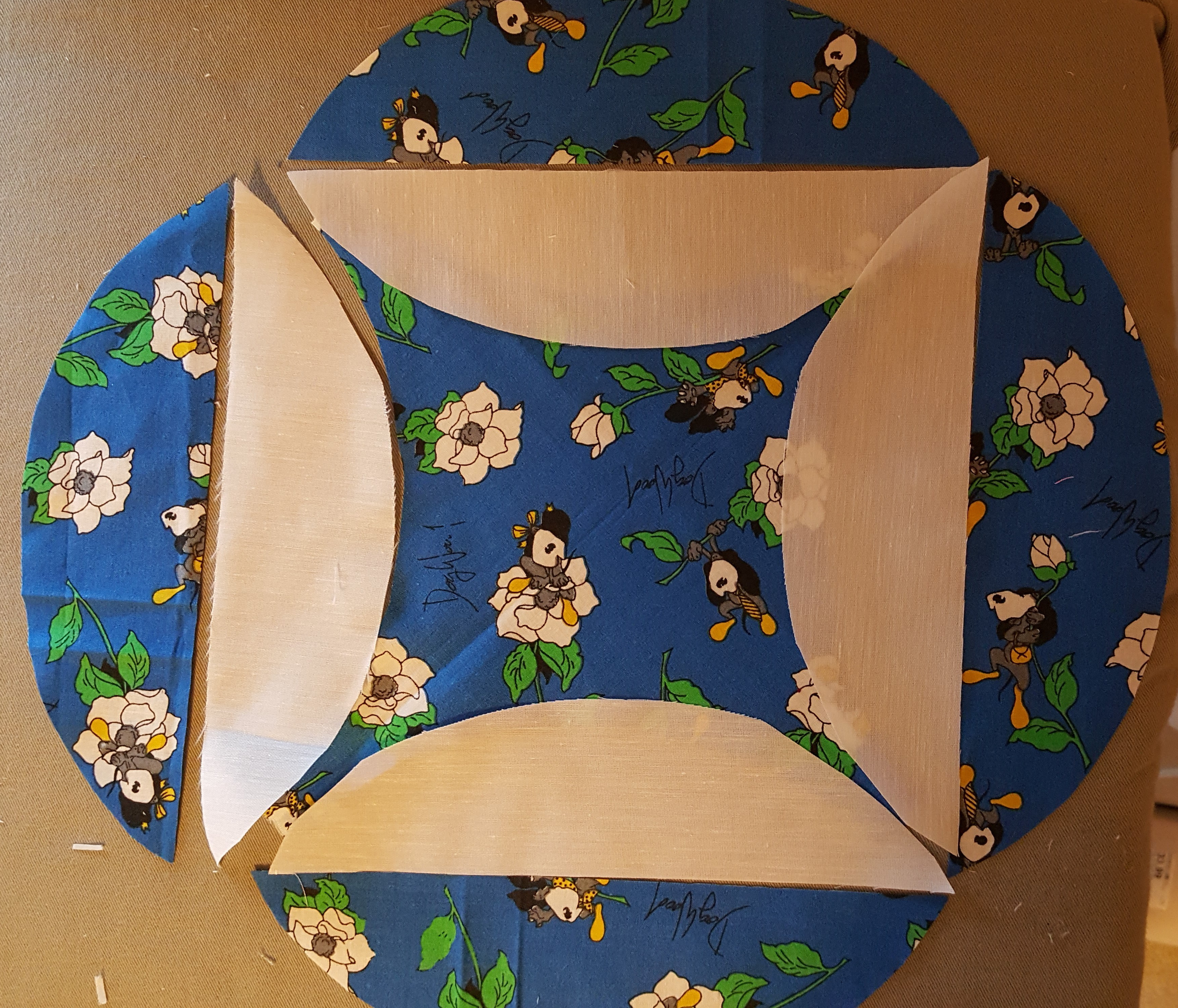
I set about re-creating this pattern with craft paper and testing. My first attempt was off by about half and inch and left lots to be desired. Not discouraged, I tried again and changed the order of my piecing. In this process, I learn. I learn more about my pattern drafting. I learn piecing order. I learn patience and understanding. I learn why young women of years ago were required to make 12 quilts before marriage. They were not only learning a skill of homemaking, they were learning so much more about themselves.